+1 (409) 800-6601
 contact@virtualbuildingstudio.com

Data centers operate inside very tight tolerances. Every cable tray occupies one assigned path. Every chilled water line follows one engineered route. Every conduit fits one designated bracket. A single routing conflict at one node triggers ripple effects across the entire program.
Coordination failures raise operational risk far beyond simple budget overruns. The visible cost shows up inside change orders. The deeper cost hides inside delayed commissioning. It hides inside cooling penalties. It hides inside reliability gaps that surface months after handover.
This article walks through both layers of cost. It covers the direct losses owners see on every ledger. It covers the hidden losses that surface long after the ribbon-cutting ceremony. It then shows how MEP Coordination workflows for Data Centers protect the asset across its full operational lifecycle. The benefits reach from day one of construction through years of tenant occupancy.
Direct Costs: The Visible Line Items
Direct costs land on every project ledger. Owners read them inside the change order logs. Three categories dominate this bucket of pain.
Rework
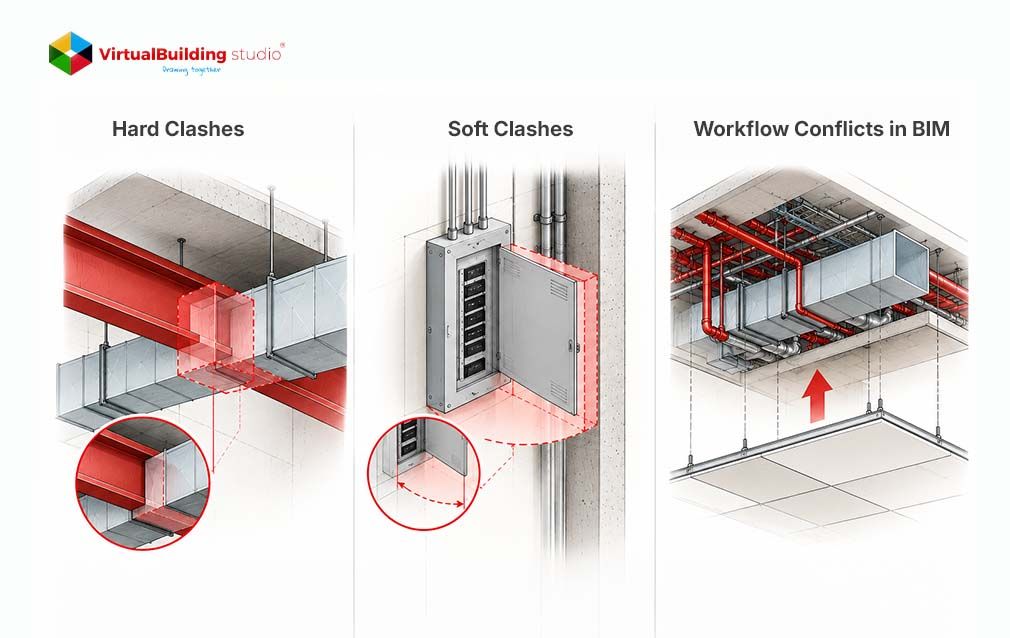
Rework happens when installed services collide on site. A chilled water riser cuts across a busway path. A drain pipe blocks a switchgear access corridor. The crew then dismantles the installed system. They reroute the conduit. They patch the slab penetration. Each rework cycle burns labor hours, material spent, and schedule float.
Material Wastage
Material wastage trails every rework cycle. Pre-cut cable tray sections turn into scrap. Custom-fabricated duct sections lose their purpose. Copper pipe lengths shrink into unusable offcuts. Inside a hyperscale build, the wastage runs into tens of thousands of dollars per coordination failure.
Change Orders
Change orders carry administrative weight beyond raw construction cost. Each order requires design review. Each order requires owner approval. Each order pushes the schedule downstream. Contractors often add markup to absorb the disruption. Owners then carry a heavier final invoice.
Hidden Costs: The Iceberg Below the Surface
Direct costs are the visible tip. The deeper losses sit below the waterline. Failures of MEP BIM services in Data Centers create financial damage that surfaces months after handover.
Delayed Commissioning
Commissioning delays cost real revenue. A data hall earns income only after handover. Every week of delay pushes the revenue clock back across the asset life. Tenant SLAs start late. Stranded capacity sits idle on the balance sheet. Lease income lost during a postponed go-live event rarely gets recovered downstream.
Cooling Inefficiency
Cooling inefficiency raises operating expense across the asset lifecycle. A poorly coordinated chilled water layout creates dead zones inside the white space. Hot spots form near server racks. CRAC units work harder to compensate for the imbalance. Power Usage Effectiveness drifts upward year over year. The facility pays for that drift across decades of operation. Even a modest PUE shift compounds into substantial annual energy spend on a hyperscale campus. Disciplined HVAC Systems in Data Centers BIM modeling solves the problem upstream.
Power System Conflicts
Power conflicts threaten reliability outcomes. Routing clashes force last-minute changes to feeder paths. A 2N redundancy plan can degrade into N+1 by accident. The operator then carries a hidden single point of failure. One transformer fault then triggers an outage. Rigorous electrical systems BIM for data centers prevents that drift.
Labor Inefficiencies
Labor moves slowly inside secure data halls. Crews face biometric access checks. They face escort protocols. They face strict tool-tracking discipline. Any field rework inside a live zone multiplies labor cost by a factor of three or four.
Data Center-Specific Risk Factors
Standard commercial buildings tolerate small coordination errors. Data centers do the opposite. Three risk factors raise the stakes inside this asset class.
Tier III and Tier IV Uptime Requirements
Tier III facilities allow only 1.6 hours of downtime per year. Tier IV facilities push that limit down to 26.3 minutes annually. A coordination error that triggers one unplanned shutdown can consume the entire annual outage budget in a single event. The tier rating then comes under scrutiny.
Redundancy Failures from Routing Clashes
Redundant feeders must follow separate physical paths. Backup chilled water loops must stay isolated from each other. A routing clash can collapse two redundant routes into one shared zone. The facility then loses its tier rating in practical terms. The certification paperwork might still show formal compliance.
Limited Shutdown Windows
Live data centers offer tiny maintenance windows. Some operators allow four hours per quarter for invasive work. A field rework job that needs eight hours, then forces a partial shutdown. Tenant SLAs then trigger penalty payments.
Reducing these risks requires disciplined MEP Coordination for Data Centers from the earliest design stage onward.
Cost Escalation Reality: The $50 to $50,000 Curve
Cost escalation follows a steep curve through the project lifecycle. Patrick MacLeamy of HOK formalized this pattern through his Effort Curve research. A clash caught at the design stage costs about $50 to fix. The designer adjusts one line inside the federated model. The change takes minutes of work. The same clash caught at the fabrication stage runs around $500. The fabricator pauses production. The shop reorders material. The schedule absorbs a small slip downstream.
The same conflict caught during installation inside a mission-critical zone exceeds $50,000. Crews dismantle the work. They reroute services. They’re commission systems. They retest the redundancy paths. Owners absorb downtime risk through the entire fix window. The risk profile climbs higher when the clash sits inside a fully populated server hall.
This escalation curve makes the case for early data center MEP BIM Services. Every design hour invested upstream saves construction days downstream. Every clash resolved on screen avoids weeks of site disruption.
Real Research: The ROI of Early MEP Coordination for Data Centers
Industry research consistently documents the return on upstream coordination investment. The findings appear across academic studies and documented project case files.
Remodeling Drains Construction Budgets
CII Research Summary 203-1 titled Making Zero Rework a Reality documents direct rework cost levels. The figure averages around 5 percent of total construction costs. Broader CII research from documents the range stretching from 2 percent to 20 percent of contract value. Hwang et al. analyzed 359 projects inside the CII database. The study identified poor design coordination as a leading cause of rework. Owner changes ranked alongside it. Inside a $300 million data center build, the rework exposure climbs into tens of millions of dollars. The damage grows wider when coordination quality stays weak.
BIM Impact on Cost and Schedule
A peer-reviewed study published in Discover Materials analyzed BIM implementation across multiple case projects. Adoption of MEP BIM Services reduces project timelines by an average of 20 percent. It cut project costs by 15 percent. It decreased design errors by 30 percent. It reduced requests for information by 25 percent. The flagship case study inside the paper deployed BIM across all project phases. That case delivered a 38 percent cost reduction plus a 35 percent time reduction.
Downtime Stakes for Data Centers
Recent industry research places the average enterprise data center downtime cost at roughly $9,000 per minute. The Information Technology Industry Council survey reports outage costs of $1 million to $5 million per hour for major events. The math alone funds many coordination cycles upstream.
How to Avoid These Costs
Three workflow disciplines protect the project budget. Each one attacks a root cause of coordination failure.
Early BIM Coordination
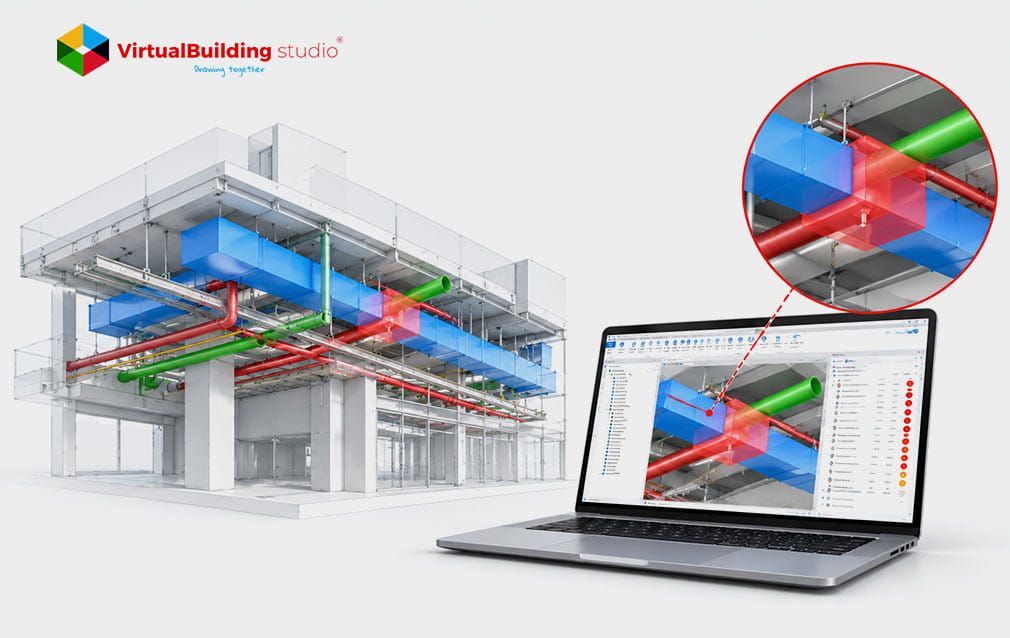
Early BIM coordination starts before structural steel arrives on site. Architects, engineers, and structural engineers share one federated model. Clash detection runs weekly through the design phase. The team resolves conflicts inside the model. Construction documents then reflect a fully coordinated outcome.
Specialist firms deliver MEP BIM Coordination for data centers at hyperscale velocity. Their teams run Navisworks, Solibri, or Revizto clash sessions. They issue clash reports for every trade. They drive resolution sprint by sprint.
Clearance and Redundancy Modeling
Clearance modeling captures service zones far beyond raw equipment dimensions. Chilled water piping needs an insulation envelope, plus an access room for valves and gauges. NEC 110.26 governs electrical working space requirements. Switchgear lineups require 36 to 48 inches of working depth, depending on voltage class and opposing surface condition. The width must reach 30 inches minimum or the full equipment width. The model must show these envelopes inside every plan view.
Redundancy modeling proves physical separation. An A-side feeder and a B-side feeder must occupy separate trays. The model flags any zone where both sides share a single penetration sleeve. This step alone prevents most tier rating failures during a third-party audit.
Prefabrication Alignment
Prefabrication moves work off the live site. Skid-mounted pump assemblies arrive ready for connection. Modular busway sections ship preassembled from the factory floor. The site crew installs in hours instead of days. Prefabrication works only when the model matches the field within tight millimeter tolerances. Disciplined coordination workflows make this match achievable at scale.
Specialist providers package the full pipeline under MEP BIM Services. They cover modeling clash resolution, shop drawings, and fabrication packages under one accountable roof.
Where Modeling Connects Design to Field Execution
MEP Modeling for Data Centers ties design intent directly to construction reality. The federated model carries three parallel streams under one shared coordinate system.
The electrical stream governs feeder routing, transformer placement, and redundancy validation. The mechanical stream covers chilled water loops, CRAC placement, plus air containment design. The plumbing stream addresses condensate drainage, fire suppression piping, plus humidification supply lines.
Data Center BIM Challenges grow heavier with each new rack generation. Liquid cooling adds entirely new pipe networks across the white space. Higher voltage distribution shifts clearance rules. Uptime Institute reporting documents AI deployments reaching 100 kW per rack inside hyperscale builds. Earlier rack generations operated at far lower density levels. The federated model adapts only through deep coordination discipline.
Specialist providers offer turnkey MEP data center services that combine modeling, clash detection, shop drawing production, and fabrication coordination. The owner then gets one accountable team across the full delivery cycle. Vendor management overhead drops at the same time.
Conclusion
Data centers sit at the intersection of high capital cost and zero tolerance for failure. MEP Coordination Services decides whether that intersection produces profit or pain. Disciplined workflows protect three outcomes at once. They protect the schedule. They protect the budget. They protect their compliance.
Owners who fund deep coordination workflows upstream recover the investment many times over. The math holds across every facility size from edge sites to gigawatt campuses. Each design hour returns measurable construction savings. Each upstream clash resolution shields the project from downstream pain.
The shift from reactive site correction toward proactive model coordination defines the new standard for mission-critical delivery. Hyperscale operators already work this way. Colocation builders follow the same playbook. Three workflows form the operating triangle for delivery success.
Early BIM coordination sits at the first corner. Clearance modeling occupies the second corner. Prefabrication alignment fills the third corner. Together they reduce direct rework costs. They protect commissioning timelines. They preserve redundancy integrity across the full life of the asset.

Ready to Eliminate Costly Site Rework?