+1 (409) 800-6601
 contact@virtualbuildingstudio.com

Small and mid-sized architecture firms hire drafting staff for peak workloads, then carry full cost when projects slow. Deltek’s 47th Clarity study covers architecture and engineering firms. It found operating profit on net revenue fell to 16.7%. The same release says demand is steady, but delivery capacity is a constraint.
Hiring locks in salary, software, and hardware costs before the next slowdown. Firms that outsource architectural documentation services can convert part of that fixed cost into project-based spend. The move adds coordination work, so timing matters.
Before comparing partners, you need a clear scope, evidence of a capacity gap, and your own cost numbers.
What Are Architectural Documentation Services?
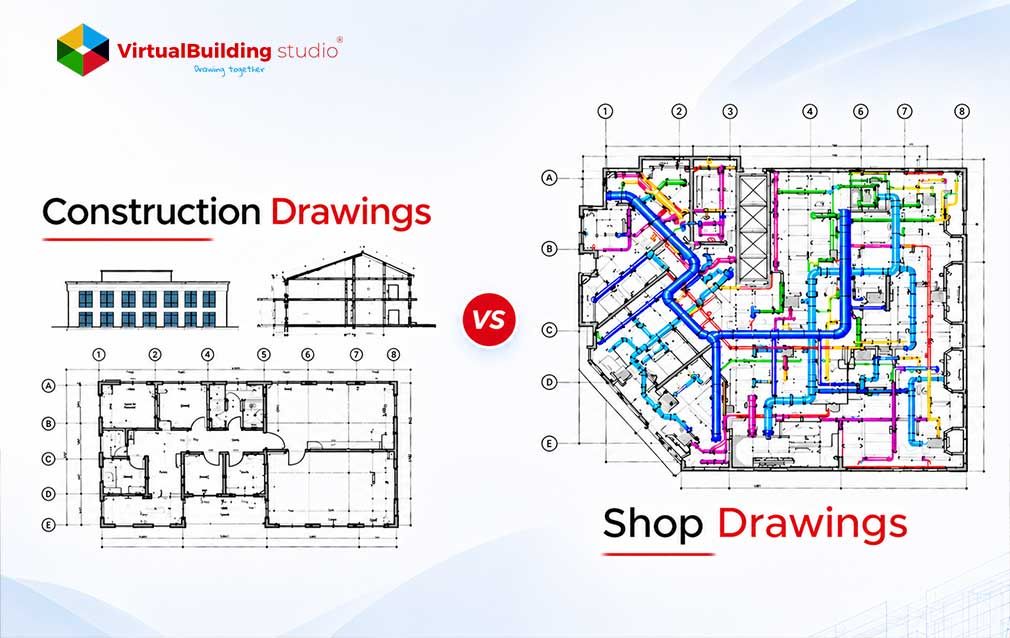
Architectural documentation covers the drawings, models, and specifications that turn a design concept into a buildable project. The set also becomes part of the contract record shared by owners, consultants, and contractors. Scope grows from schematic plans through detailed construction documents to field-verified as-built records.
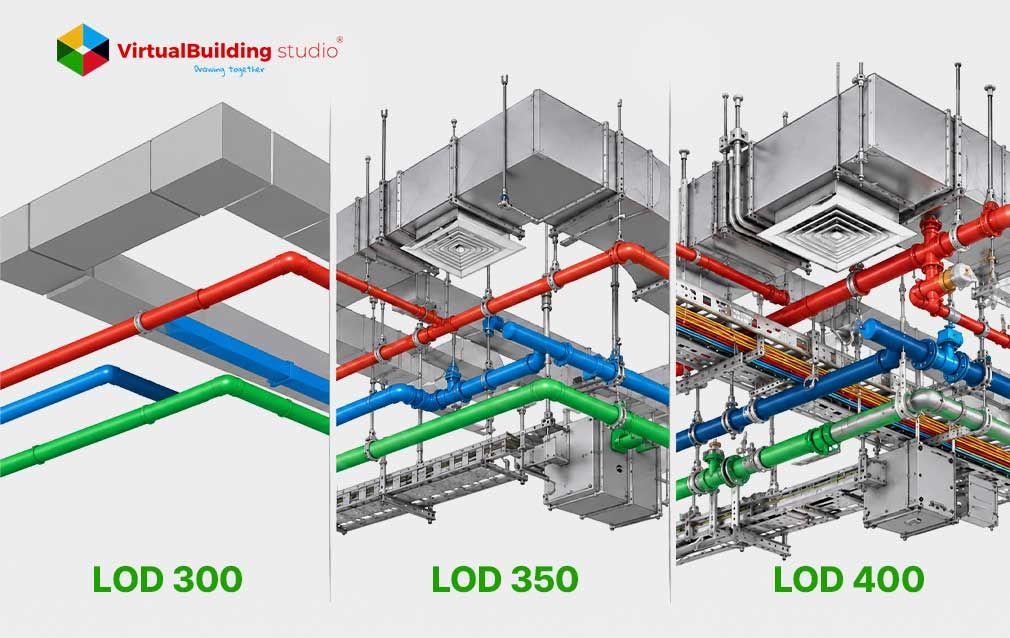
Level of Development (LOD) rates the detail and data a model element carries. It runs from LOD 100 massing to LOD 400 fabrication. Construction documents demand large volumes of sheet production, which is where firms start asking about outside capacity.
Why Are Architecture Firms Considering Documentation Outsourcing?
Large sheet volumes are hard to absorb with permanent staff, and three pressures add to the strain.
- Margin is the first pressure. Realization is the share of billable work a firm collects, and rework, scope creep, and uncollected invoices lower it. Realization below 80%, or more than $50,000 a year in uncollected work, is a screening threshold for reviewing production hours.
- Hiring is the second. A hiring cycle runs 60 to 90 days, and new drafters then need training in construction technology and BIM.
- Software is the third. Revit costs $3,005 per named user each year, the AEC Collection $3,675, and Revit LT $560, which lacks cloud worksharing. An external team carries its own licenses, so a firm pays for architectural drafting services through project fees instead of holding every seat year-round.
Whether outsourcing pays off depends on the signs below showing up in your own records.
7 Signs Your Firm Needs Architectural Documentation Support
A single sign can have other causes, so test each one against your timesheets, project files, and cost records. Two or three signs together make a stronger case.
Your In-House Team Is Struggling With Increasing Workloads
Overtime that runs for several months points to a capacity gap, not a temporary spike. Rushed drafting can leave out details and force rework, which uses the hours the team was already short of. Check billable utilization, how long overtime has lasted, and proposals declined for lack of drafters. If capacity is the cause, deadlines are the next place it shows.
Your Construction Document Deadlines Are Frequently Delayed
Missed permit or bid dates are a visible symptom of a drafting bottleneck. A commercial set needs wall sections, ceiling plans, enlarged details, and schedules, all of which take drafting hours. First, find out whether late submittals trace to design decisions or to production hours. Only production delays point toward outsourcing.
When production is the cause, firms can hand secondary sheets to an outside team. Project architects then stay on the submittals that control the schedule.
Hiring and Training Drafting Professionals Is Becoming Expensive
Salary is only one line in the cost of a drafter. Add benefits and payroll taxes, workstation hardware, IT support, software licenses, and senior time spent training new hires. Then compare the total for one seat with quotes for architectural drafting services. If the count shows a skills gap rather than a cost gap, the next sign applies.
Your Firm Lacks Specialized Revit and BIM Expertise
Some contracts call for model-based deliverables that a CAD-based team may struggle to produce without retraining. BIM or Building Information Modeling is a coordinated 3D model that drawings and schedules are generated from. Moving from 2D CAD to BIM requires template setup, component libraries and staff training, so billable work slows.
If your contract names a required LOD, an outside team already working at that level can deliver the model. Firms that bring in Revit drafting services this way can avoid pausing production for a software transition.
Your Senior Architects Spend Too Much Time on Drafting
Senior hours carry an opportunity cost that routine drafting hides. Every hour spent adjusting dimension strings or updating schedules is an hour not spent on clients, fees, or design direction. Sort one month of senior timesheets into design, client work, management, and production drafting. Where drafting takes a noticeable share, price the gap between a senior rate and a production rate. Reclaimed senior time is most useful during workload spikes, which is the next sign.
Your Firm Needs to Scale Resources for Project Peaks
Architecture workloads rise and fall with project wins, financing, and client approvals, but payroll does not. A permanent hire made for a short peak becomes a fixed cost when the peak ends. Firms can instead add outside drafters for a defined phase and scale back at construction administration.
Agree ramp-up and ramp-down terms, notice periods, and minimum commitments in the contract, or the flexibility exists only on paper. Peak periods also test drawing quality, which is the final sign.
Drawing Quality and Documentation Consistency Are Becoming Difficult to Maintain
Quality problems can surface in the field as RFIs, which are written contractor questions about unclear documents. Navigant Construction Forum reviewed RFI data from 1,362 projects started between 2001 and 2012. It estimated $1,080 and about eight hours to answer one RFI.
Treat the estimate as a reference point, not a forecast. RFI counts alone do not prove incomplete design, since some RFIs are routine messages or repeated questions. Track your own RFIs per project and note how many trace to missing or uncoordinated details. If several signs hold up, decide which tasks to hand over first.
What Architectural Documentation Tasks Can You Outsource?
When the signs confirm a gap, hand over work with clear inputs and deliverables. Keep design authorship, client leadership, and site supervision in-house.
- CAD to BIM conversion of paper, PDF and AutoCAD drawings, and point cloud files like RCS or E57 into as-built Revit models at LOD 200 to 300
- Construction document sets from your schematic inputs, including plans, elevations, sections, wall assemblies, reflected ceiling plans and schedules
- Parametric Revit families (.rfa) for doors, windows, light fixtures and millwork
- Clash detection and BIM coordination across architectural, structural and MEP models
- Redline and revision processing from Bluebeam Revu or AutoCAD markups
Redlines, schedules and sheet compilation are practical starting points for architectural drafting services. Their inputs and checks are easy to define. Next comes the comparison with your current team.
In-House vs. Outsourced Architectural Documentation: What’s the Difference?
The difference comes down to who carries fixed cost, who holds the skills, and who manages daily production. After choosing tasks to move, compare the two models on five points.
- Cost: In-house teams carry salary, software and hardware all year. Partners bill by the hour, sheet, or project.
- Scale: In-house capacity changes through hiring or layoffs. Partner capacity changes through contract terms.
- Expertise: In-house skill depends on the people you employ. Partner skill depends on who is assigned, so verify it.
- Management: Principals handle hiring and daily oversight in-house. With a partner, they manage scope, standards and review.
- Continuity: In-house teams face turnover and leave. Partners cover absences only if the contract says so.
A fair in-house vs outsourced architectural documentation comparison uses your own cost and quality records, so cost comes first.
How Much Does Architectural Documentation Outsourcing Cost?
Architectural documentation cost depends on the pricing model and on the in-house rate you compare it against. A US architectural drafter with a median base salary of $66,235 earns $31.84 per hour. Add benefits, payroll taxes, office space, hardware amortization, and an Autodesk AEC Collection license i.e., $3,675 a year, or about $1.84 per hour and the fully burdened rate runs $50 to $80 per hour.
Providers of Revit drafting services quote blended rates of $20 to $45 per hour, set by project complexity, required LOD, and team seniority. Firms can save 40% to 60% on technical production labor, though the figure depends on the rates compared.
Work is priced under four models for architectural documentation services in the USA.
Hourly, $20 to $45 per hour
Billed on the basis of logged production hours against approved timesheets. It's helpful for schematic design iterations, ongoing redlines and undefined scope.
Fixed fee per sheet, $150 to $400
Priced per delivered sheet and adjusted for sheet size (ARCH D or E) and detail complexity, it suits standardized commercial rollouts, multifamily construction document sets, and retail expansions.
Lump sum, 20% to 30% of total fee
It is tied to milestones like 50% at design development and 100% at construction document submission. It suits well-defined commercial projects with fixed scopes and rigid timelines.
Dedicated full-time equivalent at $3,000 to $5,500 per month
One drafter works 160 hours a month exclusively for your firm. This suits long-term studio support and continuous project pipelines.
Take a commercial project that needs 1,000 hours of construction documentation drafting. At a burdened in-house rate of $65 per hour the internal labor costs $65,000. At a blended outsourced rate of $30, the fee is $30,000. The difference is $35,000 or 53.8%. These rates are assumptions, and the comparison excludes your review time.
How to Choose the Right Architectural Documentation Partner
Weigh code familiarity heavily for architectural documentation services in the USA, because details must pass local plan review.
- BIM proficiency, including Revit, Navisworks Manage, Autodesk Construction Cloud, ISO 19650 and AIA CAD Layer Guidelines
- Sector and code experience with your building types, the International Building Code, ADA guidelines and Title 24 or COMcheck
- Data security through NDAs, secure VPN access, encrypted transfers and Common Data Environment (CDE) management
- Communication, including overlapping hours, a named project manager and escalation paths
- A paid pilot, such as a CAD to BIM conversion or one detail package, to test accuracy, turnaround and responsiveness
Score each pilot against the same checklist and feed the results into your in-house vs outsourced architectural documentation comparison.
How Does the Architectural Documentation Outsourcing Workflow Work?
A repeatable workflow gives each phase an owner, which is what the pilot should test.
- Onboarding: Principals and the partner’s project manager set scope, sheet list, standards, and LOD in a BIM Execution Plan.
- Input handover: Your firm sends sketches, massing models, markups, and code requirements.
- Model setup: The partner builds the central Revit model in a shared online project space with access permissions.
- Production: The partner drafts details, plans and schedules against the sheet index.
- QA/QC review: The partner checks sets against your standards and runs model audits and clash checks.
- Sign-off: Your project architect reviews the set, requests changes, and approves it for submission.
Automation now touches several of these phases, which changes what you should ask a partner.
AI and Automation in Architectural Documentation
Automation changes how sheets are produced, while people still decide what goes on them. Teams can script repetitive tasks in Dynamo or Grasshopper, such as placing tags and filling room data. Review tools, including AI-assisted ones, can flag missing tags or inconsistent annotations, and a reviewer decides what to fix.
Ask any partner which automation it uses, who reviews the output, and how errors are caught.
Conclusion
Firms should outsource architectural documentation services when their records show a gap that hiring cannot close at acceptable cost. Overtime, late construction documents, and senior time spent drafting are strong signals when they appear together.
Start by pulling last quarter’s utilization, architectural documentation cost per drafter, and RFI counts. Then run a paid pilot on one sheet set and compare accuracy, turnaround, and cost against your in-house baseline.

Ready to move drafting work off your team's desks?