+1 (409) 800-6601
 contact@virtualbuildingstudio.com

Modern construction projects carry far more building systems within tighter spaces than projects built even a decade ago. Mechanical, electrical, plumbing, fire protection, and structural systems now compete continuously for ceiling space, risers, shafts, and service corridors. Because of this density, coordination problems no longer stay isolated inside drawings. They directly affect procurement, fabrication, installation, and scheduling.
This is where an experienced MEP BIM Coordination Team becomes critical. Coordination teams help contractors and consultants to resolve conflicts before they reach the field where fixes are costly and disruptive.
Research indicates, rework still accounts for nearly 5% to 10% of total project costs, and communication failures continue to be the cause of avoidable field conflicts.
Projects using structured MEP BIM Coordination Services usually experience fewer RFIs, better constructability reviews, and more reliable installation planning because teams address issues digitally before fabrication begins.
Role of an MEP BIM Coordination Team
A coordination team is the link between design intent and field execution. The role of a coordination team is much more than taking design intent and producing 3D models. They ensure systems can be installed efficiently, safely, and with minimal disruption to other trades.
Multi-Trade Coordination
Mechanical, electrical, plumbing and fire protection systems are designed in isolation. The coordination team combines these disciplines into a shared environment and evaluates how they interact. This process helps prevent routing conflicts while supporting logical installation sequencing.
Clash Detection & Resolution
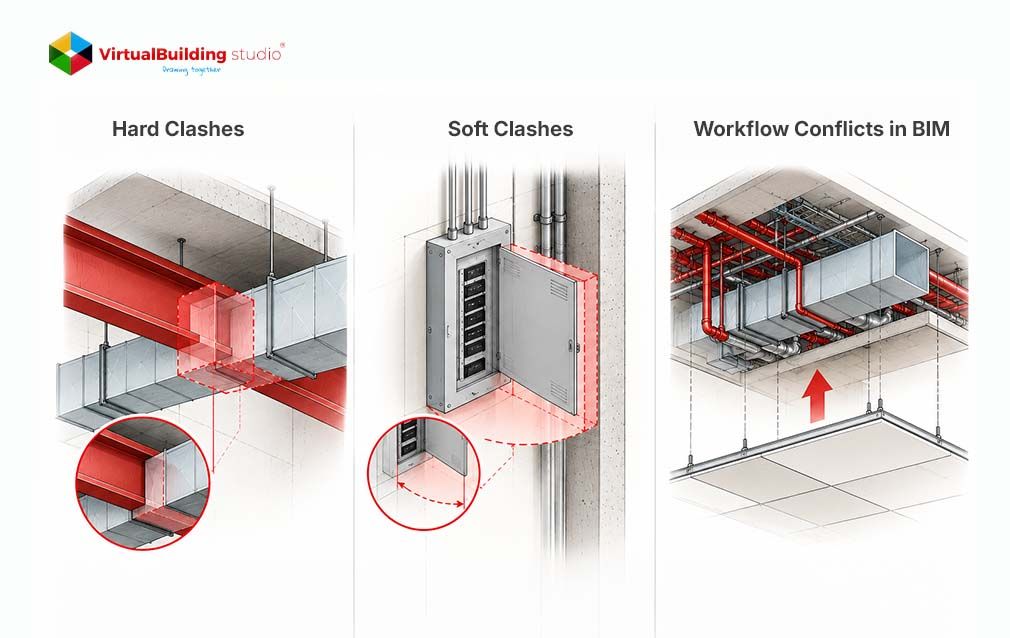
A major responsibility of the team is conducting structured MEP Clash Detection Services. Rather than relying on raw software outputs, coordinators analyze hard clashes, clearance violations, and constructability concerns. They prioritize issues, assign ownership, and guide teams toward practical solutions before work reaches the field.
Model Management
The team also manages model quality and information flow. File audits, coordination verification, naming standards and Common Data Environment management ensure that stakeholders work from accurate and current project information. These activities are the basis of successful MEP BIM Coordination Services.
To support these coordination activities effectively, teams also produce a set of structured deliverables that guide construction planning and execution.
Key Deliverables You Should Expect
The value of coordination becomes visible through the deliverables produced during the process. These assets help to inform decision making, support construction planning and reduce uncertainty during installation.
Federated Models
A federated model combines architectural, structural, and trade-specific models into a single coordinated environment. This shared view allows project teams to evaluate system interactions and make informed decisions using a common source of truth.
Clash Reports
Professional clash reports provide far more than a list of conflicts. They include issue prioritization, visual references, trade ownership, and resolution tracking, helping teams focus on problems that affect constructability and schedule.
Coordination Drawings
Coordination drawings are generated directly from the coordinated model. They display approved routing elevations, penetrations, and installation requirements more accurately than traditional drafting workflows.
Fabrication-Ready Models
MEP BIM services typically develop models at LOD 350 or LOD 400 for prefabrication. These highly detailed models help create Clash-Free BIM Models that can be used with confidence for manufacturing, assembly, and installation planning.
Understanding these deliverables becomes easier when viewed within the step-by-step coordination workflow that guides projects from planning through fabrication approval.
Typical Coordination Workflow
A coordination process succeeds because it prevents teams from solving the wrong problems at the wrong time.
Imagine running clash detection before agreeing on shared coordinates. Every trade might be technically correct, yet the models would still appear misaligned. That's why coordination starts with governance rather than geometry.
BEP Setup
The BIM Execution Plan establishes the rules everyone will follow. Shared coordinates, model standards, routing priorities, and clash tolerances are agreed upon before coordination begins.
Once those rules are in place, the project finally has a common framework. Only then does it make sense to bring the models together.
Model Federation
The coordination team combines architectural, structural, and MEP models into a single environment. For many projects, this is the first time stakeholders can see how every system competes for space inside the building.
Not surprisingly, conflicts begin to surface almost immediately.
Clash Detection Cycles
Some conflicts are critical, while others are simply modeling artifacts. The team's role is to filter out false positives, prioritize meaningful issues, and focus attention where it delivers the most value.
Of course, identifying a clash does not resolve it.
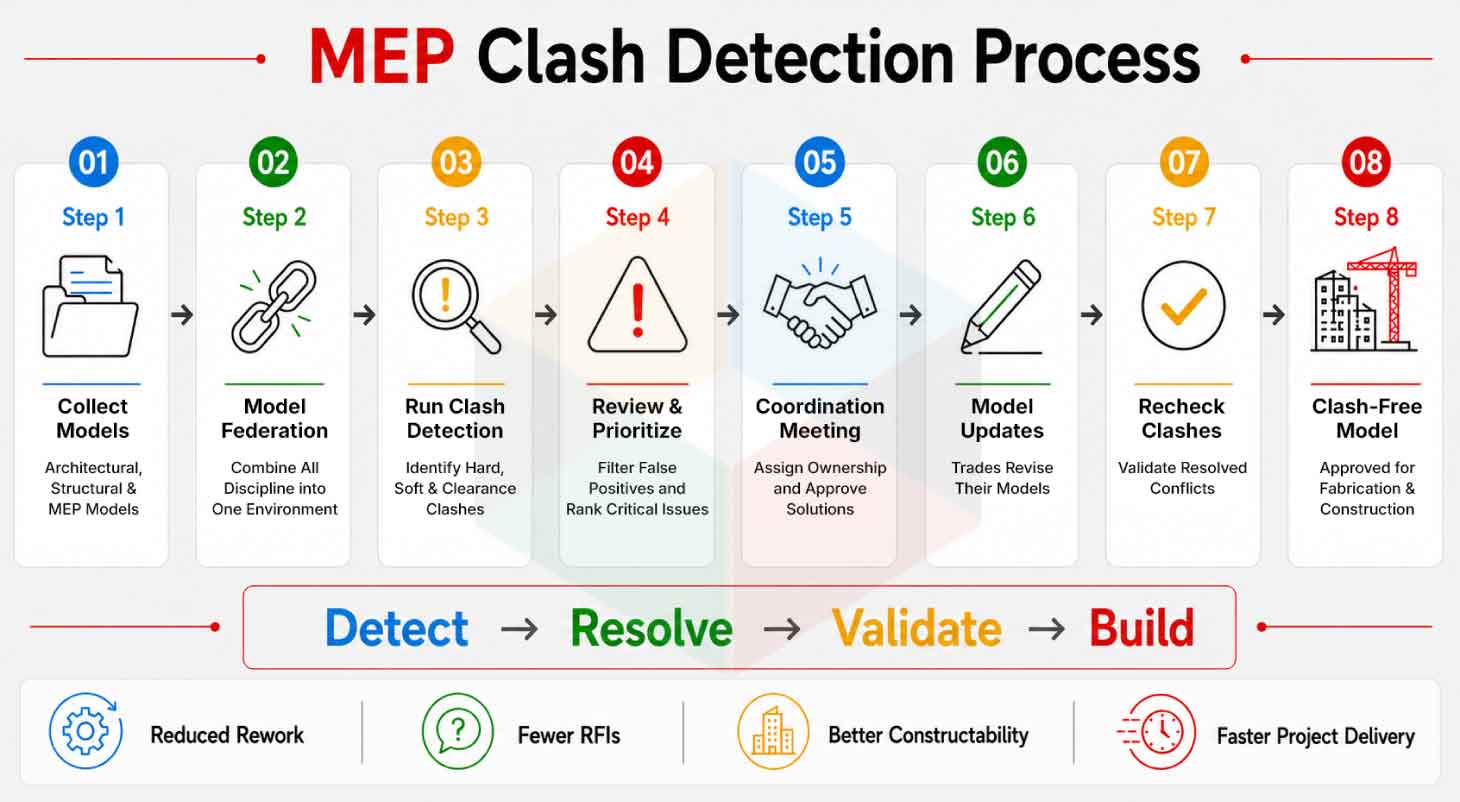
Coordination Meetings
Every conflict ultimately requires a decision, which is why regular coordination meetings remain essential.
These meetings bring together key stakeholders to review unresolved issues using the same federated model. The goal is not to review every clash but to reach agreement on the conflicts that matter most.
Once decisions are made, they must be tracked.
Resolution Tracking
Clear ownership keeps coordination moving. A routing change may be approved during a meeting, but it remains unresolved until someone updates and verifies the model.
Structured issue tracking assigns responsibility, tracks deadlines and monitors progress.
As problems are worked out the model becomes a better representation of the final build.
The research shows , that the use of cloud-based BIM collaboration platforms reduces clash-related issues by nearly 75% and decreases the duration of coordination meetings by 50%.
Model Freeze
A coordinated model only creates value if teams can rely on it. Once a zone or project phase reaches the required level of coordination, approved layouts are locked and released for fabrication, procurement, and installation planning.
From that point forward, changes are tightly controlled, and the focus shifts from resolving conflicts to executing the work with confidence.
The next phase focuses on how coordination teams maintain communication, accountability, and reporting throughout the project life cycle.
Coordination Frequency & Communication
Even the best coordinated model can lose value surprisingly fast.
A routing decision made during a coordination meeting is only useful if every affected trade receives the update and acts on it. That is why communication sits at the center of successful coordination efforts.
Weekly Meetings
Most teams use weekly coordination meetings to review unresolved conflicts and evaluate model updates. These meetings create alignment, but they rarely solve problems on their own.
The real progress happens between meetings.
Issue Logs
Once decisions are made, they need to be tracked. Issue logs document ownership, deadlines, and resolution status to ensure accountability.
Of course, tracking only works if you have the right people.
Reporting Structure
High-performing teams establish clear reporting channels that connect modelers, project managers, superintendents, and decision-makers.
Escalation procedures ensure that important issues that are not resolved get attention before they impact the schedule.
This much communication is even more important when companies outsource MEP coordination services since multiple organizations simultaneously contribute to coordination decisions. Strong reporting systems facilitate the maintenance of accountability across consultants, subcontractors, and general contractors.
Tools & Platforms Used
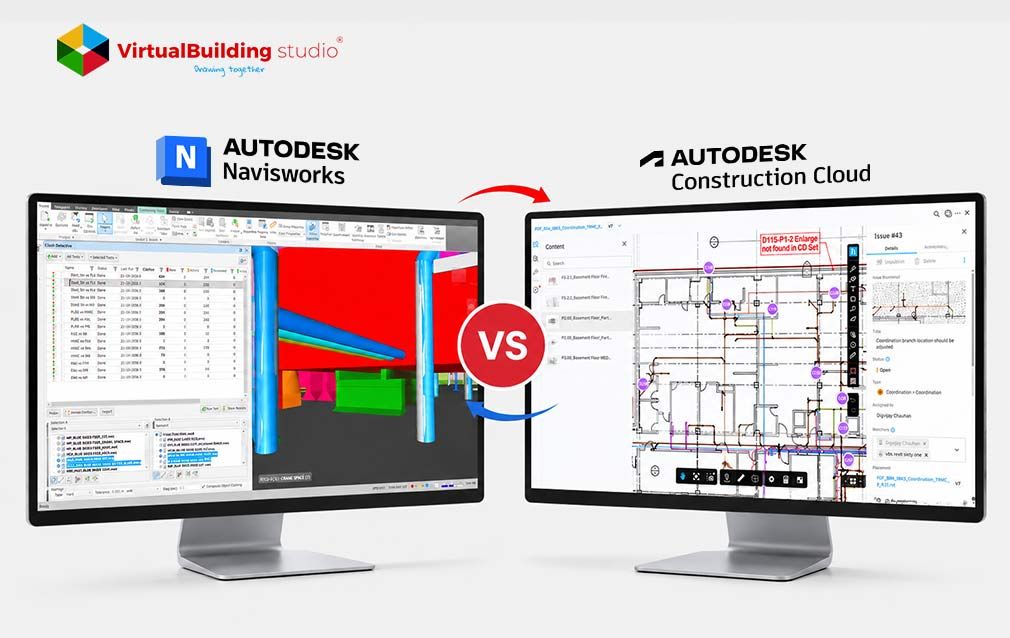
Coordination teams use integrated BIM platforms to manage modeling, MEP clash detection services, issue tracking and real-time collaboration across disciplines.
Together these platforms support a seamless Mechanical BIM Workflow from design to construction.
Coordination success is not just about technology. It’s the skill and maturity of the team using the tools that ultimately drives the project outcome.
Maturity Levels of Coordination Teams
Not every coordination team delivers the same level of value.
While most teams can identify clashes, the real difference lies in how they manage information, support decision-making, and contribute to project outcomes.
Basic Coordination Teams
At the most basic level coordination is largely reactive. Teams take drawings, make models, do clash testing, and generate reports after major design decisions have already been taken.
While this process identifies obvious conflicts, many constructability issues remain unresolved until later in the project.
Structured BIM Coordination Teams
More mature teams embed coordination within the design-development process. They work within prescribed standards, track issues in a structured way, and develop models to support installation planning and prefabrication.
At this stage, coordination is a collaborative process rather than a separate task.
VDC-Driven Coordination Teams
Highly mature teams work in a Virtual Design and Construction environment. They align BIM coordination with procurement planning, scheduling, prefabrication, and installation sequencing. Coordinated models directly support construction execution, enabling contractors to improve constructability reviews and reduce installation disruptions.
What differentiates these teams is their ability to combine technical modeling expertise with real-world construction knowledge. They understand not only where systems fit but also how they will be installed, maintained, and operated. This method produces more accurate results and better-quality Clash-Free BIM Models at all times.
Red Flags to Watch Out For
A coordination process may seem productive on the surface, but lurking problems are growing.
- Late Coordination Risks: One of the most common red flags is late coordination. When coordination starts after key design decisions are taken, teams have fewer options to resolve conflicts efficiently.
- Poor Clash Tracking: Another red flag is poor clash management. Stakeholders are tired when reports show thousands of unfiltered clashes with no prioritization or ownership. Important issues are buried among minor conflicts, reducing entire process efficiency.
- Lack of Accountability: A lack of accountability can be even more damaging. Missed meetings, outdated models, unresolved issues, and ambiguous responsibilities often indicate that coordination has become disconnected from project execution.
The most effective MEP BIM Coordination Team maintains clear ownership, structured workflows, and active participation from every trade. Without those fundamentals, even the best software cannot prevent downstream problems.
KPIs to Measure Team Performance
The success of coordination should be measured through outcomes rather than activity.
Clash Resolution Rate
One of the most important indicators is clash resolution rate. Top-performing teams consistently resolve the majority of critical conflicts prior to construction, reducing the chances of field rework and installation delays.
RFI Reduction
A decline in Requests for Information is another strong indicator of coordination quality. When models and drawings clearly communicate design intent, field teams spend less time seeking clarification and more time executing work.
Prefabrication Readiness
Prefabrication readiness assesses the effectiveness of coordinated models to facilitate off-site manufacturing. Accurate models allow trades to fabricate assemblies with greater confidence, reducing labor requirements and improving installation efficiency.
For organizations seeking MEP BIM Services for General Contractors, these KPIs provide a practical way to evaluate whether coordination efforts are generating measurable project value.
Conclusion
Modern projects demand far greater coordination accuracy than traditional construction workflows can support. Dense service routing, compressed schedules, and increasing prefabrication requirements now place continuous pressure on design and construction teams to resolve conflicts earlier in the project lifecycle.
This is why experienced MEP BIM Coordination Teams have become essential across healthcare, commercial, aviation, industrial, and mission-critical construction projects. Strong coordination teams create structured workflows that connect model federation, clash detection, issue management, constructability reviews, and fabrication planning into one coordinated process.
The most reliable MEP BIM Coordination Services focus on accountability as much as modeling. They go beyond software knowledge, ensuring those who own the communication track issues and drive projects to constructible, fabrication-ready results. When determining the right coordination partner, contractors need to look beyond the level of software knowledge. Coordination maturity, reporting transparency, issue tracking discipline, and measurable KPIs all play a role in determining if teams can deliver reliable, clash-free project execution.

Make early BIM coordination part of your preconstruction strategy