Construction runs on data. A single project throws off design models, cost sheets, procurement logs, equipment readings, and stacks of site photos every single day. Most of it arrives too late to be useful. Field teams burn hours matching one record against another when they should act on what those records already say. Artificial intelligence steps into that gap. It reads live inputs as they arrive, learns from completed projects, and brings risks to light while a team still has time to react. This guide walks technical BIM professionals through the working mechanics, the gains worth measuring, and where the road heads next.
What Is AI in Construction?
AI in construction covers digital systems that learn from data and read messy site conditions the way a seasoned engineer would. They step into decisions that once demanded manual analysis and long experience. The reach is broad. You find these systems inside design offices, out on the jobsite, and running quietly behind asset operations long after handover.
A handful of technologies do the bulk of the work. Machine learning digs through old project records and picks out patterns in productivity, delays, and cost drift. Generative AI spins up design options that already sit inside the budget and honor code. Computer vision watches camera and drone footage, tracking progress and catching hazards a walkthrough would miss. Natural language processing pulls obligations out of contracts, RFIs, and daily logs so nobody reads two hundred pages hunting for one clause. Robotics takes the intelligence and puts it to work physically, on the ground.
Uptake stays uneven, though. Recent industry surveys show plenty of firms stuck at the pilot stage, while barely a sliver has woven the technology through the whole organization. That lag hands early movers a real edge.
Why AI Is Becoming an Important Part of the Construction Industry
Traditional construction leans on frozen plans and feedback that shows up late. A schedule gets patched after the disruption already hit. Someone reviews costs only after the overrun is obvious. Safety paperwork surfaces the problem after the incident. That backward order bleeds margin and drags down delivery.
AI flips the order around. Raw data becomes an early warning instead of a late autopsy. A team stops asking what went wrong and starts asking what comes next. Bigger jobs, thinner margins, fewer skilled hands on deck: each one makes the flip more urgent. Firms now lean on AI in construction as a control layer that holds uncertainty in check across design, delivery, and operation.
The money side adds its own weight. Global construction cleared $13 trillion in 2023, yet productivity crawled at roughly 0.4% a year from 2020 to 2022, against 2% for the wider economy, per McKinsey. AI points straight at those sluggish numbers.
Key Applications of AI in Construction
Value shows up at every phase. The applications below track the workflows BIM engineers touch daily.
AI in Construction Project Management
AI takes scattered operational signals and turns them into guidance that refreshes on its own. Documentation, RFI handling, and progress tracking: it automates the lot, and reporting lag shrinks as a result. Scheduling models flex too, nudging timelines and moving resources around as the ground shifts under a project.
Three wins land here for the practitioner. Automated reporting lifts the clerical load off a manager's desk. Live scheduling swallows a weather delay or a late delivery the moment it happens. Allocation of labor and gear sharpens across trades once the data does the sorting. AI construction automation clears out the manual reconciliation that used to eat a whole afternoon.
AI in BIM Coordination and Clash Detection
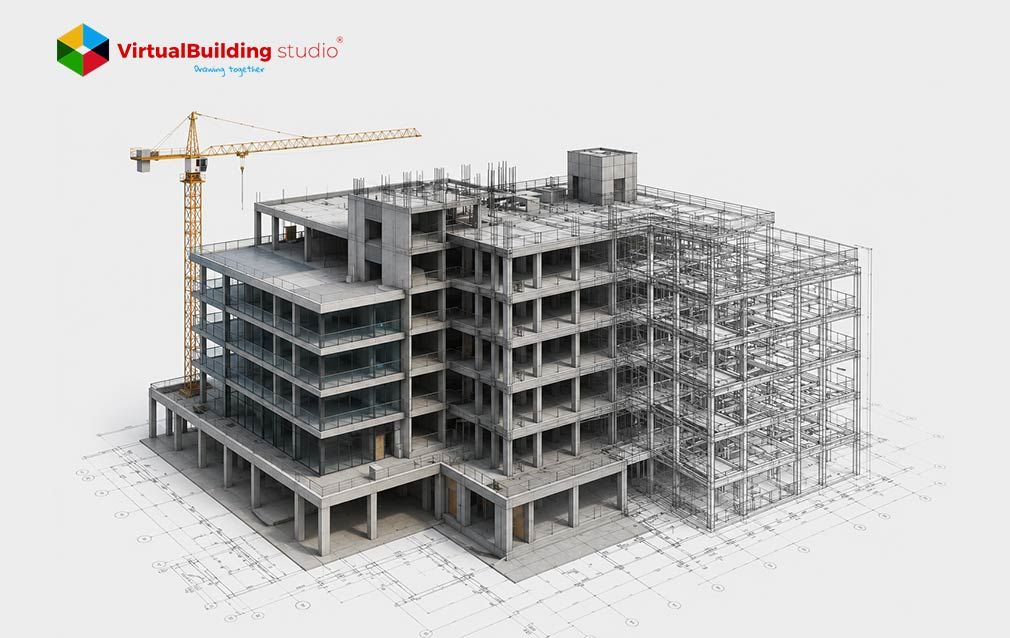
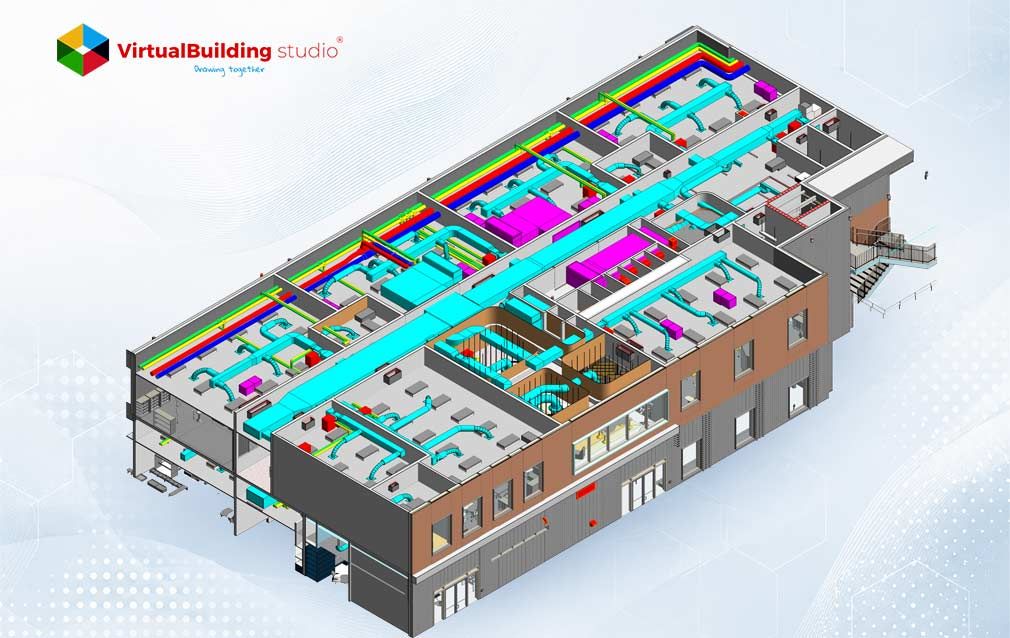
This is where the accuracy gets sharp. Federated models feed vision systems that hold finished work up against the design intent and measure the gap. AI in BIM catches routing conflicts between mechanical, electrical, and plumbing runs well before a crew shows up to build them. I have sat as an auditor on federated files and watched the software flag a clash that a rushed manual review, buried under a deadline, would have sailed right past.
Detection runs continuously, day after day. Resolve a conflict during modeling, and the fix costs pennies. Let that same conflict slip through to fabrication, and the price jumps into the hundreds. Find it inside a live facility, and the number climbs somewhere nobody wants to explain to an owner.
AI in Construction Estimating and Scheduling
Static estimates give way to living financial models. Quantity extraction keeps pace with the model, recalculating as the design shifts rather than waiting for a milestone. Cost exposure gets weighed against past performance, how suppliers actually behave, and the shape of the contract. Takeoffs that used to swallow weeks now finish in hours, which lets a firm bid sharp and keep its margin whole.
Scheduling turns into a forecasting job. The system runs the downstream fallout of a delayed delivery and floats an adjustment before a crew ends up standing around. Boston Consulting Group pegs the share of construction tasks open to full or partial automation at up to 30%.
AI in Construction Safety
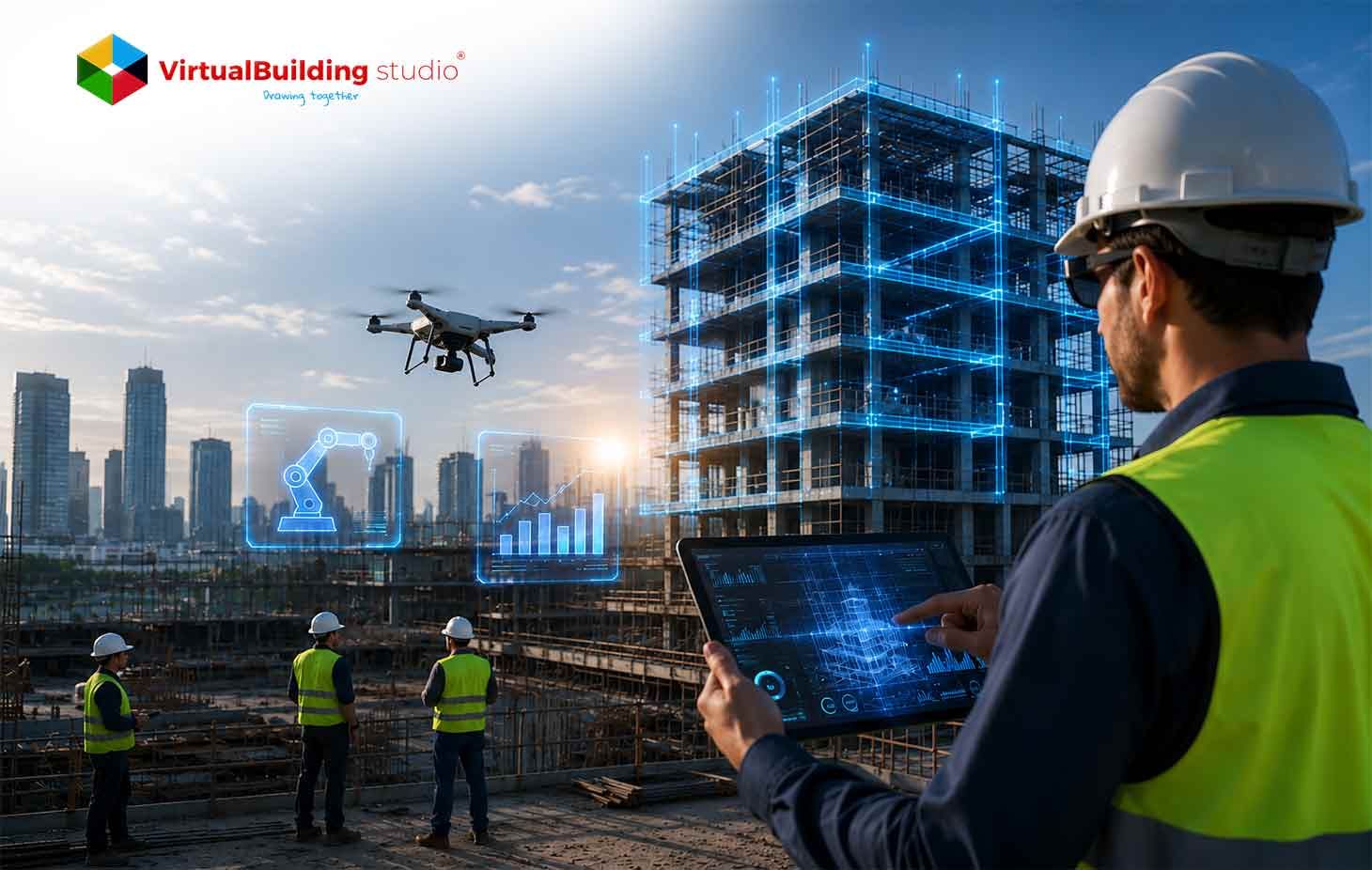
Oversight moves off the periodic clipboard check and onto something continuous. Live video runs through computer vision, which spots a missing safety hat, a risky move, or someone drifting into a zone they should skip, all in close to real time. Wearables add another layer, tracking how near a worker gets to machinery and flagging the early signs of fatigue.
Risk management gets a clearer view of the future. The software lines up old incident data next to today's site conditions and marks the windows where danger spikes. Firms that put AI safety monitoring to work report real drops in workplace incidents, and the credit goes to catching trouble early instead of writing it up afterward. AI for quality control leans on that same vision backbone, so one camera network quietly earns its keep twice.
AI in Construction Documentation and Digital Twins
Paperwork takes a heavy dose of automation. NLP reads through contracts and daily logs, pulling out deadlines and obligations while flagging anything that contradicts itself. Word travels quicker between the trailer and the office, so reporting delays fade.
After handover, the AI digital twin ties operational data back to the design somebody drew months ago. Asset performance, energy draw, and upcoming maintenance: each one feeds off a steady stream rather than a quarterly inspection. The twin grows into an operating layer that mirrors what the building actually does, right across its life.
Benefits of AI in Construction
The payoff clusters in five spots a technical team can point at and measure. Each one ties back to a workflow a BIM engineer already runs.
- Productivity: AI shoulders the coordination and paperwork, so routine reporting and RFI handling run themselves off live data. People get their attention back for the calls that need judgment.
- Safety oversight: Experts watch hazards without a break, and the software marks trouble early.
- Cost control: Forecasts redraw themselves the instant a design moves.
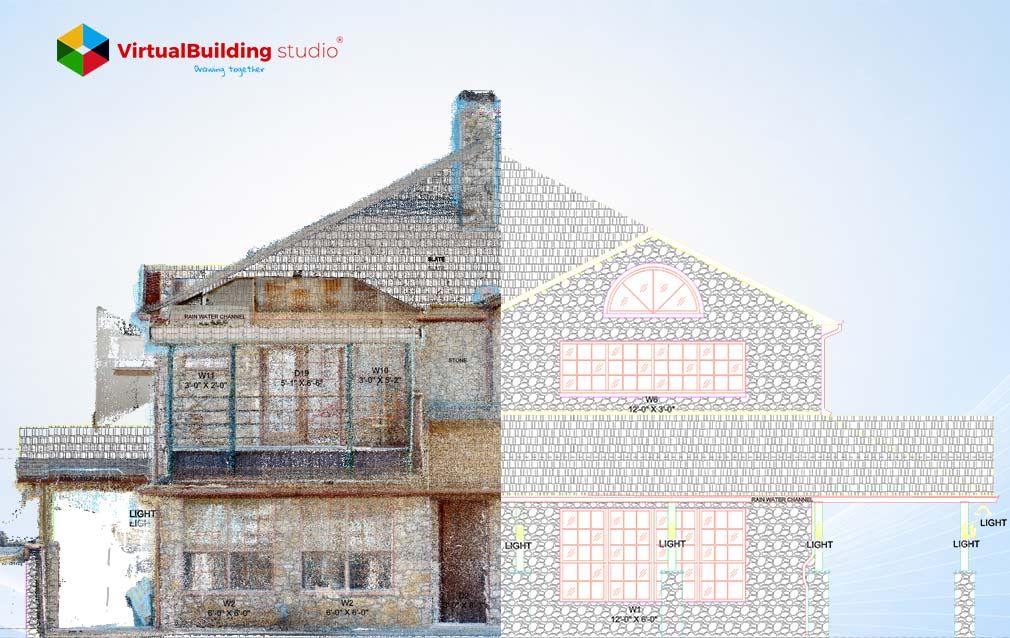
- Build quality: Drones and vision systems catch a deviation early, back when fixing it stays cheap.
- Sustainability: The models trim material waste and tune energy use over the whole life of the asset.
Hard numbers back this story. A study found BIM cut project delays by anywhere from 7% to 67% across the cases it reviewed, and lifted coordination enough to shave changes by 6% to 47%. The spread looks wide because projects differ wildly, yet the arrow points the same way every time.
Construction Tools That Are Already Using AI
The tooling is here now. The Oracle Smart Construction Platform runs predictive analytics that surface schedule and cost risk before it bites. NetSuite folds AI through its financial and project side, sorting expenses and flagging an overrun as it forms. Autodesk Construction Cloud handles progress tracking through vision and keeps the model coordinated. Even the field kit pitches in: drones and mobile cameras pipe imagery into vision engines that confirm what got built that day.
These days, construction software treats AI as a core layer, essential to the entire stack. As the features ripen, managers get crisper visualizations to design, build, and repair against. Robotics platforms roll out autonomous gear that makes a jobsite both safer and busier. AI for contractors already lives inside the estimating suite, the scheduling engine, and the safety stack that a field team runs without thinking twice.
Challenges of AI in Construction
The value is only realized after a firm clears a few structural hurdles. These same hurdles trip up almost everyone, regardless of company size.
Data quality sits at the top. AI needs consistent, structured records pulled from design, planning, and operations alike. Scatter that data across stray spreadsheets and orphaned models, lose chunks of history, and model accuracy suffers. The fix is a shared data environment: clear ownership, standard formats, and one source everybody trusts.
Integration comes next. Scheduling tools, cost systems, BIM platforms, all humming along in their own corners, choke the feedback loop the moment they refuse to talk. Wiring them together through APIs threads AI into the flow without ripping out what already works. Then there is the human piece. Thin AI literacy breeds hesitation, and people question an output they cannot trace. Targeted training plus plain operating rules build confidence, one repeatable result at a time. Cost, cybersecurity exposure, and a moving regulatory picture round out the list of things to watch
How Construction Firms Can Start Using AI Responsibly
Durable results come from patience and a measured pace. Pick one priority use case that addresses a real pain point, such as clash detection or automated takeoffs, and start there. Prove it on that single workflow. Then widen the circle.
Lay the data groundwork before anything fancy. Clean, structured records feed accurate models, so governance earns its place ahead of advanced analytics. Keep a person in the loop at every turn. An engineer reviews the output, catches the error, and checks it against the contract before it counts. Explain to the team how a recommendation gets made, because trust follows understanding. A firm already running integrated ERP starts a lap ahead, its data sitting clean and ready for AI to read.
Plenty of firms shorten the climb with specialist partners. BIM modeling services hand over federated models that feed an AI coordination engine geometry it can actually use. Architectural BIM services supply design intent models primed for generative work. Revit modeling services build the parametric assets that a vision system checks against real progress. And a team weighing BIM outsourcing services costs buys a predictable budget along with faster access to model-ready data.
Future Outlook of AI in Construction
The trajectory points toward adoption that spans the whole organization, reaching across planning, delivery, and operations rather than sitting in one pocket. Academic attention tracks the same climb. A systematic review, covering 122 studies, found research on AI applications in construction safety rising from 5 publications in 2016 to 23 in 2024. That steep curve marks a field moving from early concept to everyday deployment.
Four shifts stand out. Autonomous jobsites gain ground as robotic fleets take on earthmoving, material transport, and the repetitive assembly work that puts people in harm's way. AI moves from quiet analysis to active decision support integrated into daily work. Industrialized delivery picks up speed, with AI knitting design, manufacturing, and logistics together for prefab and modular work. Roles change shape too, tilting toward oversight, reading the data, and validating what the machine proposes rather than shuffling coordination by hand.
AI in industrial construction and AI in building construction meet on the same ground: delivery that moves in concert. Digital twins graduate into live operating layers that run through construction and into the years that follow. The firms that invest in clean, continuous data and use the technology with care will read risk and asset performance with a clarity their peers lack.
Conclusion
AI changes how a construction team wrestles with uncertainty from the first sketch to the last inspection. It reads live data, calls the likely outcome, and backs a decision while there is still time to make one. Project management becomes tighter, BIM coordination becomes sharper, estimates become more accurate, and safety oversight runs without blinking. The research confirms the gains in delays and coordination, even as the exact figures swing with the project.
None of it works on autopilot, though. Clean data, a phased rollout, and a steady human hand at each checkpoint make it work. Firms that pour that foundation now set themselves up for a way of building where planning, fabrication, and field execution finally move together. AI closes the distance between what a team expects and what the site actually delivers.
Ready to Transform Your Construction Projects with Architectural BIM?