

MEPF BIM Modeling
Developed LOD 350 MEPF models across 56 units, group-living spaces, and community areas in Revit.

Delivered precise LOD 350 BIM coordination across complex MEPF systems for a multi-story affordable housing project.
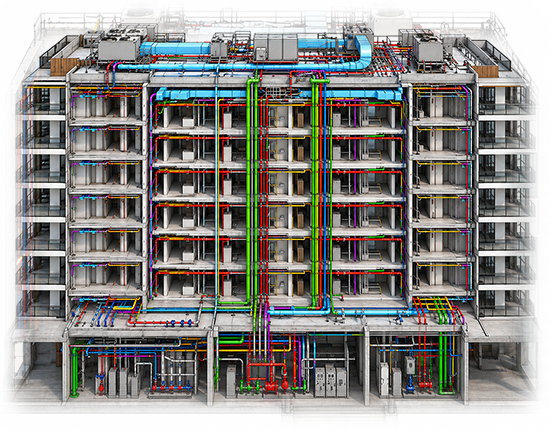
When an MEPF firm needed dependable BIM expertise, they turned to us. The project was a 79,100 sq. ft., 7-story affordable housing building in Revere, MA. It featured 56 residential units, supportive group-living spaces, and ground-floor community areas.
We delivered fully coordinated LOD 350 MEPF models, resolved all clashes, and produced penetration drawings within a 2-month timeline.
 Project Type Residential Building
 Level of Development LOD 350Project Area 79,100 Sq.Ft.
 Manpower Used 5 Resources
 Location Revere, MA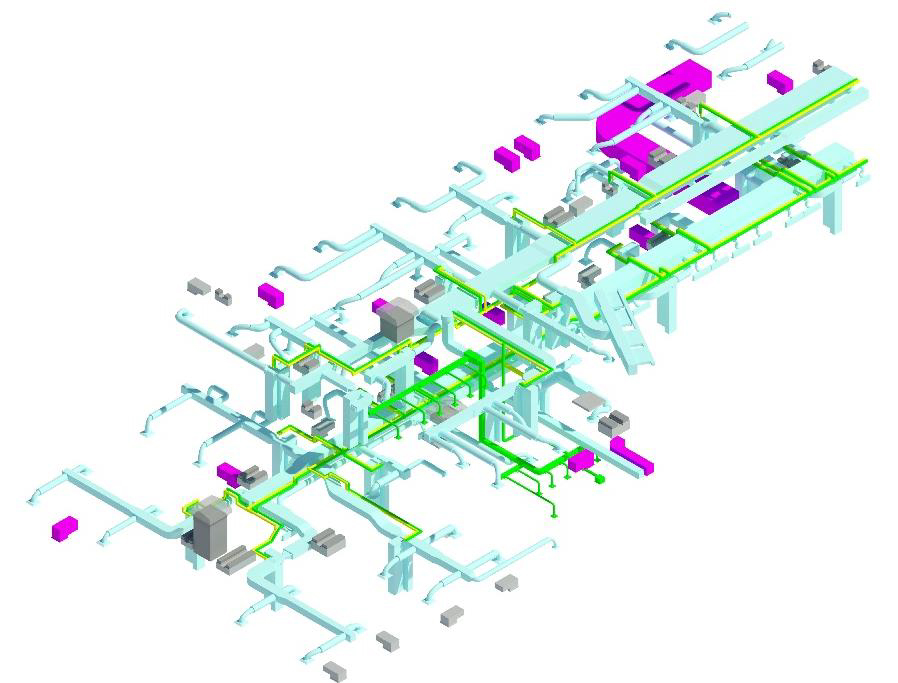
MEPF coordination ran in Autodesk Revit and Navisworks for modeling, clash detection, and penetration drawing production.
 Autodesk Revit
 Navisworks
From fragmented discipline inputs to LOD 350 clash-free MEPF models and penetration-ready documentation across seven floors.
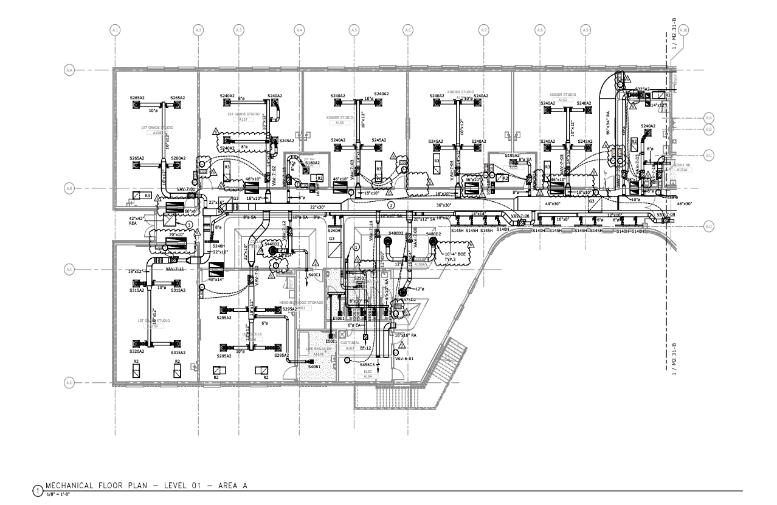
High-density unit layouts, diverse space typologies, and seven-floor MEPF coordination created significant delivery pressure.
MEPF systems across seven floors required precise alignment to prevent costly on-site construction conflicts.
56 residential units with shared community spaces created intricate routing challenges for all building systems.
Structural penetrations had to be accurately located and documented across all floors for safe installation.
Coordinating MEPF systems for standard units, group-living spaces, and service areas added significant coordination complexity.
Lack of standardized processes across the team disrupted coordination and reduced overall modeling efficiency.
Misaligned tools between disciplines created data exchange issues and slowed the coordination process.
Identifying and resolving multi-discipline MEPF clashes across seven floors required continuous attention and precision.
Incorporating existing site data accurately into the BIM model was time-consuming and error-prone.
A structured BIM workflow with regular clash detection cycles and disciplined modeling standards ensured seamless MEPF integration.
Developed LOD 350 MEPF models across 56 units, group-living spaces, and community areas in Revit.
Ran continuous clash detection and issue tracking across seven floors and multiple disciplines.
Produced accurate structural penetration drawings for safe installation across all floors.
Established standardized BIM workflows and model management practices for the full project team.
Maintained structured coordination records and reporting throughout the two-month engagement.
Disciplined MEPF Coordination Across Seven Floors
We implemented a structured BIM workflow focused on coordination efficiency and accuracy. Regular clash detection cycles, disciplined modeling standards, and proactive communication ensured seamless integration of all MEPF systems within the defined timeline.
Model Setup and BIM Standards Alignment
Model Setup and BIM Standards Alignment
Model Setup and BIM Standards Alignment
Model Setup and BIM Standards Alignment
MEPF System Modeling in Revit
MEPF System Modeling in Revit
MEPF System Modeling in Revit
MEPF System Modeling in Revit
Clash Detection and Issue Identification
Clash Detection and Issue Identification
Clash Detection and Issue Identification
Clash Detection and Issue Identification
Coordination Meeting and Issue Tracking
Coordination Meeting and Issue Tracking
Coordination Meeting and Issue Tracking
Coordination Meeting and Issue Tracking
Iterative Clash Resolution
Iterative Clash Resolution
Iterative Clash Resolution
Iterative Clash Resolution
Penetration Drawing Development
Penetration Drawing Development
Penetration Drawing Development
Penetration Drawing Development
Final Model Validation and Delivery
Final Model Validation and Delivery
Final Model Validation and Delivery
Final Model Validation and Delivery
Quantifiable outcomes delivered through precise BIM coordination, penetration-ready documentation, and proactive issue resolution.
Offshore MEPF coordination reduced delivery cost while maintaining LOD 350 accuracy across the development.
Coordinated models and penetration drawings were delivered within the two-month timeline.
Standardized workflows and structured clash cycles kept five specialists productive across seven floors.
Penetration locations and MEPF routing were validated before final model submission.
Systematic clash detection prevented multi-discipline conflicts from reaching the construction site.
Let's discuss your requirements and see how our expertise can help on your next project.