

HVAC System Modeling
Developed LOD 400 HVAC models across 25 mixed-story units with precise routing through truss and ceiling zones.

Delivered fully coordinated HVAC and hydronic systems, resolving all clashes pre-construction to ensure seamless installation and on-time project delivery.
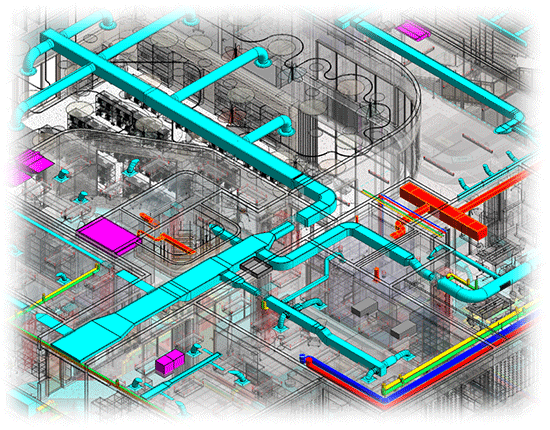
When an MEPF firm needed reliable BIM expertise for a 65,000 sq. ft. educational campus in Austin, TX, they turned to us. With 25 mixed-story units ranging from 800 to 1,500 sq. ft., the project demanded high-precision LOD 400 coordination across HVAC and Mechanical Piping systems.
We ensured every system was precisely coordinated, each clash was resolved, and the models were delivered on schedule.
 Project Type School Building
 Level of Development LOD 400Project Area 65,000 Sq.Ft.
 Manpower Used 5 Resources
 Location Austin, TX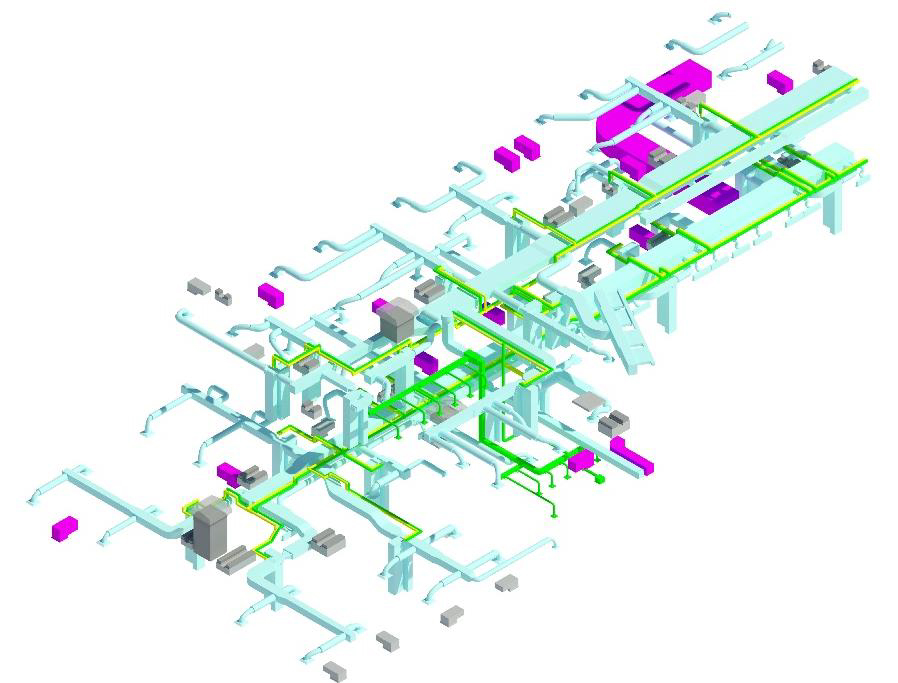
HVAC and mechanical piping coordination ran in Autodesk Revit and Navisworks for LOD 400 modeling and clash detection.
 Autodesk Revit
 Navisworks
From unresolved cross-disciplinary inputs to clash-free LOD 400 HVAC and mechanical piping models across 25 units.
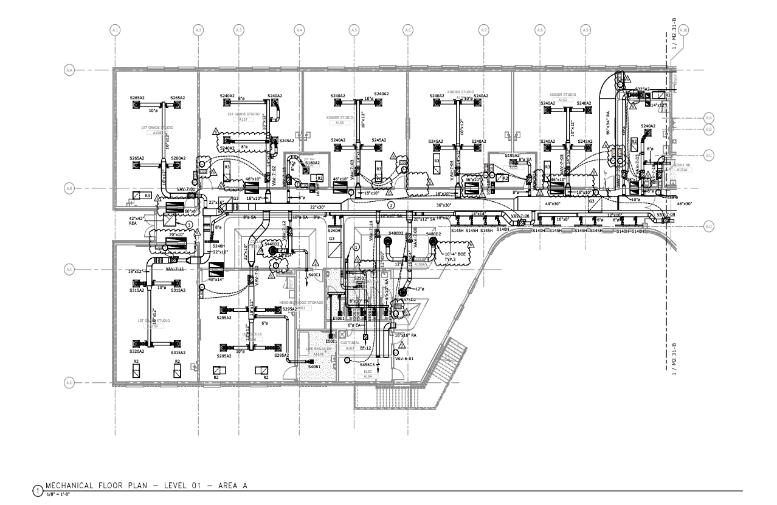
Unresolved clashes, inadequate documentation, and a strict submission deadline threatened on-time delivery across 25 school units.
Continuous conflicts between architectural, structural, and MEP systems were stalling coordination and threatening the construction schedule.
Tight project timelines combined with inefficient cross-team communication made meeting delivery milestones increasingly difficult.
Insufficient clearance planning around mechanical equipment created risks for accurate installation and future system accessibility.
Poorly structured MEP documentation was making it difficult to support effective long-term facility operation and maintenance.
Limited cross-discipline insight led to late-stage discoveries, causing costly adjustments that proactive coordination could have prevented.
Project demanded a clash-free LOD 400 model with accurate documentation, ready for direct construction execution on time.
Routing HVAC systems without interfering with structural truss zones required precise spatial planning and iterative clash reviews at every routing decision point.
Delivering coordinated outputs within strict submission deadlines while maintaining full LOD 400 accuracy across all 25 units.
A structured BIM coordination workflow using Revit for LOD 400 modeling and Navisworks for clash detection kept HVAC and piping systems aligned.
Developed LOD 400 HVAC models across 25 mixed-story units with precise routing through truss and ceiling zones.
Modeled mechanical piping systems with equipment clearance and maintenance access requirements built in.
Ran proactive clash detection cycles and resolved conflicts across architectural, structural, and MEP systems.
Supported construction-ready documentation derived from the coordinated LOD 400 model.
Maintained structured issue tracking and cross-team alignment through coordination reviews.
Proactive HVAC Coordination Across 25 School Units
Our team followed a structured BIM coordination workflow using Revit for LOD 400 modeling and Navisworks for clash detection. We ensured proactive coordination, real-time updates, and precise modeling to ensure seamless integration of HVAC and piping systems.
Model Setup and LOD 400 Standards Alignment
Model Setup and LOD 400 Standards Alignment
Model Setup and LOD 400 Standards Alignment
Model Setup and LOD 400 Standards Alignment
HVAC System Modeling in Revit
HVAC System Modeling in Revit
HVAC System Modeling in Revit
HVAC System Modeling in Revit
Mechanical Piping System Modeling
Mechanical Piping System Modeling
Mechanical Piping System Modeling
Mechanical Piping System Modeling
Truss Zone Coordination and Clearance Checks
Truss Zone Coordination and Clearance Checks
Truss Zone Coordination and Clearance Checks
Truss Zone Coordination and Clearance Checks
Clash Detection and Issue Resolution
Clash Detection and Issue Resolution
Clash Detection and Issue Resolution
Clash Detection and Issue Resolution
Final Model Validation and Delivery
Final Model Validation and Delivery
Final Model Validation and Delivery
Final Model Validation and Delivery
Quantifiable outcomes delivered through precision BIM coordination and proactive pre-construction clash management.
Offshore LOD 400 coordination reduced delivery cost while resolving clashes before they reached the site.
Coordinated HVAC and mechanical piping models were delivered within the project submission window.
Structured clash cycles and real-time model updates kept five specialists aligned across 25 units.
Equipment clearances and truss-zone routing were validated before final LOD 400 submission.
Systematic clash detection prevented cross-disciplinary conflicts from reaching construction.
Let's discuss your requirements and see how our expertise can help on your next project.