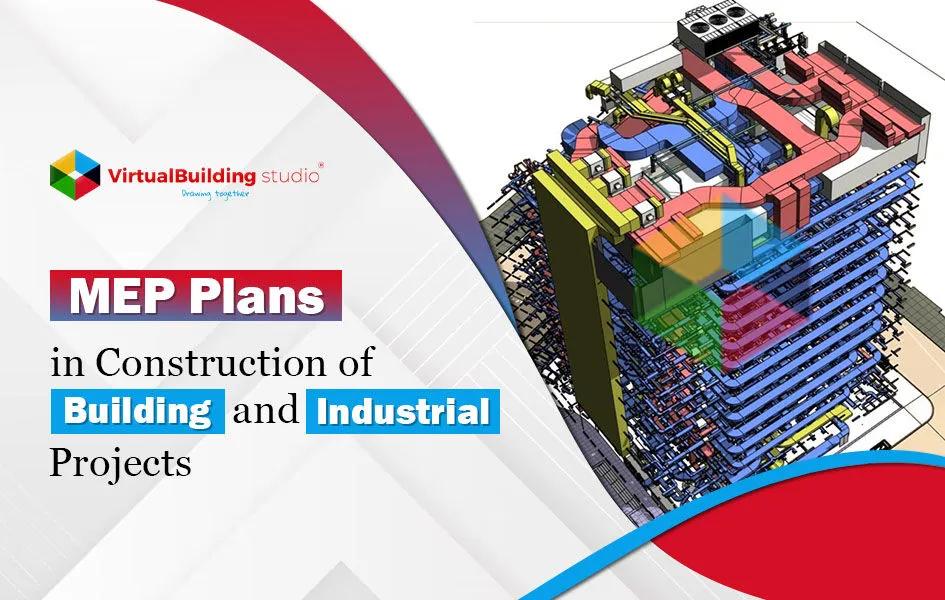
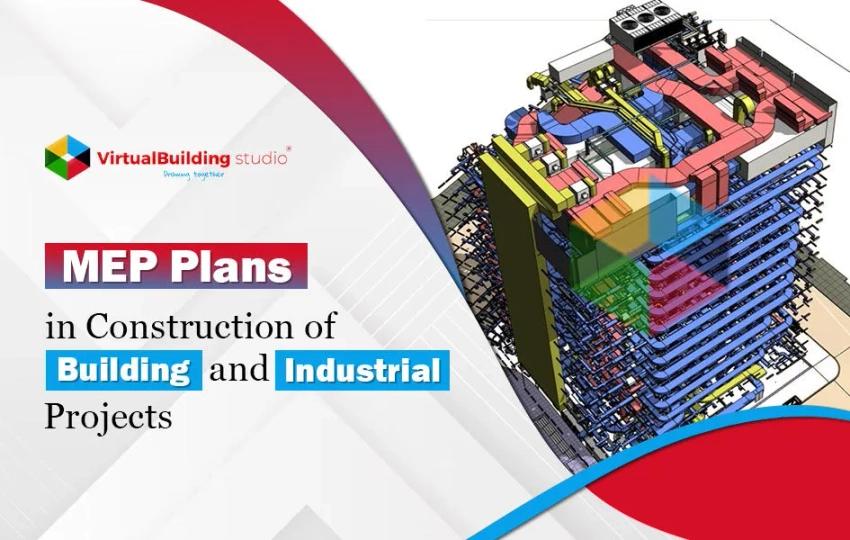
As rightly said “It is the sum of the parts that make up the whole,” every process is an amalgamation of several steps and actions. Similarly, building designing is also a concoction of multiple procedures and drawings coming together to make a whole. Mechanical, Electrical, and Plumbing or MEP Plans are a significant part of this complex building design process.
AEC professionals employ BIM modeling services to develop seamless 3D building models with explicit information that simplifies the design communication and execution processes.
Among excavation, structural, and other drawing sets included in the BIM modeling services, MEP drawings are the drawing sets required to amplify the building performance and ensure clash-free laying of MEP systems on-site.
Let’s explore MEP Plans in detail, understand the three drawing sets and figure out how they can benefit industrial projects.
Importance of MEP Plans in Construction Projects
When people talk about a building, they start with the façade or the structure. Later, they step in and notice the mechanical, electrical, and plumbing performance. The air feels right. The lighting works. The water flows. The backup power activates during an outage. These outcomes do not happen automatically. Someone plans the MEP Plans with care.
In practice, MEP Plans in Construction give teams a shared understanding of:
- Where major equipment will sit
- How ducts, pipes, and conduits move through tight spaces
- What loads the systems must handle
- How life-safety and code requirements are satisfied
- How different trades avoid stepping on each other
That clarity matters. Because MEP systems consume a large share of both construction budgets and long-term operating costs. When teams get them wrong, they pay twice. Once during installation and again during operation.
In many building projects, MEP systems represent around 20 - 35 % of total construction cost, depending on complexity and system requirements. That is why many project teams depend on MEP BIM Services to coordinate systems before construction begins. Once everyone aligns on how these systems function, it becomes easier to examine each component in detail. That is exactly where we are heading next.
Components of MEP Systems
Now that we have established why MEP matters. This helps to slow down and look at what we are actually talking about. Because when someone says MEP, it can sound abstract. In reality, it’s very tangible. It’s the systems people interact with every single day.
Mechanical Systems
Mechanical systems refer to HVAC. HVAC shapes how a building feels. Engineers decide how air moves and where equipment sits. They calculate heating and cooling loads. The scope includes air handling units, ductworks, chillers, boilers, pumps, and controls. Construction teams convert layouts into detailed HVAC Duct Shop Drawings. The shop drawings show fabricators and installers what to install and where to place it.
Electrical Systems
Electrical systems include power, lighting, wiring, and other mission-critical equipment. Designers plan service entrances, transformers, switchgear, panel boards, and backup power. Clear distribution planning prevents overloads. Clear planning reduces safety risks during operation.
Plumbing Systems
Plumbing systems include water supply, drainage, and stormwater, along with fire protection. Pipe sizing matters. Pipe slopes matter. Routing matters. Minor gaps in MEP BIM coordination create serious field conflicts.
These systems connect to each other. MEP BIM coordination services becomes essential.
What are MEP Plans?
MEP Plans elucidate the installation and operational details of the building, including positioning, layout, and materials of HVAC ductwork, piping, fire control, and conduits. These systems are engineered to create a habitable space that is appropriate for use and occupancy.
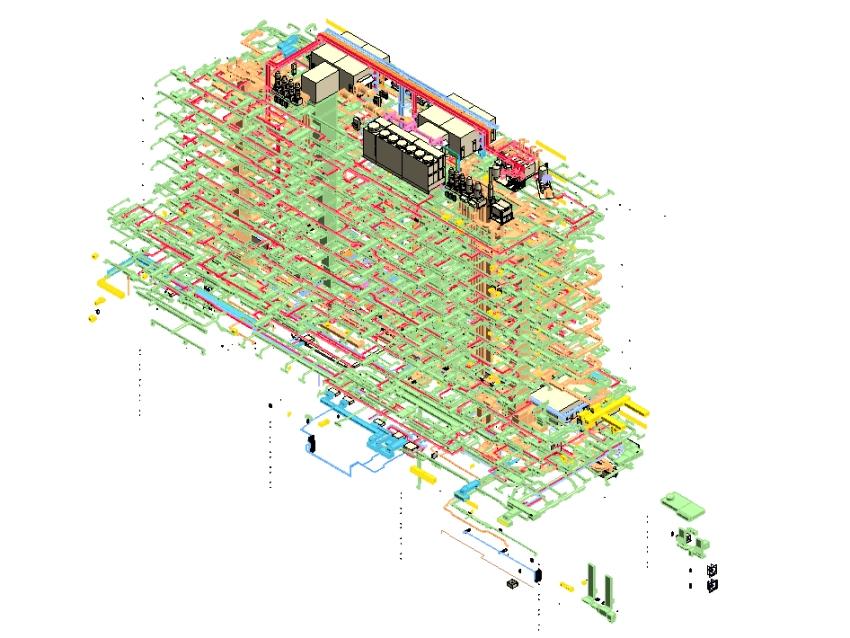
An empty room is converted to a breathable space using MEP BIM modeling services, irrespective of the building type and scale. As these disciplines function at a prominent scale in a built form, these plans are employed together to achieve optimum performance of HVAC systems, drainage systems, fire fighting, indoor and outdoor lighting, and fire alarms.
An MEP drawing depicts all the wiring, piping, visible electrical equipment, fixtures, plumbing mains, important terminals, and related components.
Here is a detailed analysis of individual drawing services and their inclusions:
Mechanical Plans
Mechanical plans are used to improve and develop data about the mechanical layout of the structure. MEP plans can ensure proper workflow, accuracy, and effective facility management for the users.
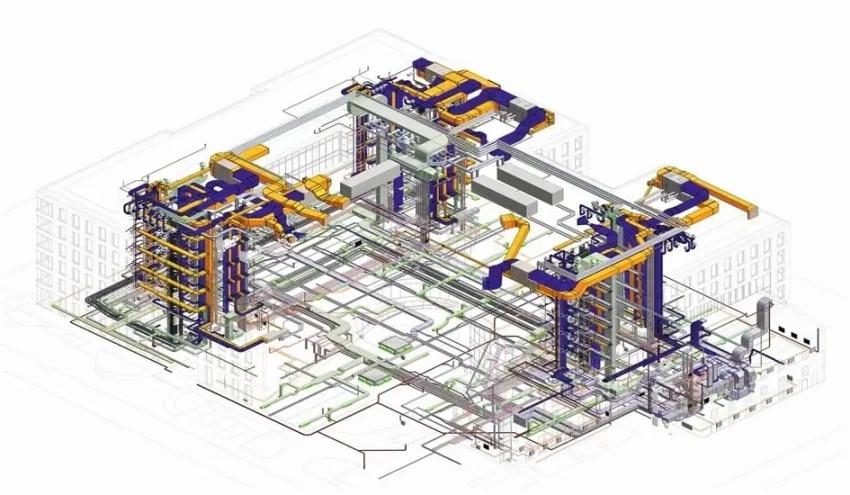
The mechanical system of any project constitutes several systems that account for a functional industrial space; Heating, Ventilation, and Air Conditioning (HVAC) systems forming a major part of it.
HVAC systems interact with each other to control the humidity and temperature of a space, making it comfortable for its occupants. The mechanical plans also entail information about the mechanical equipment installations, highlighting their best working capacity.
A myth commonly accepted while designing for mechanical systems is that over-engineering is a beneficial thing. For industrial projects, using oversized chillers or boilers tends to cycle rapidly, leading to room temperature fluctuation and early equipment breakdown. So, over-engineering should be avoided in all circumstances to achieve a successful mechanical system for the structure.
Mechanical engineering is also responsible for generating optimal routes for heat distribution systems, including steam piping, air ducts, refrigerant lines, and hydronic piping.
These systems facilitate the maintenance of indoor air quality and humidity levels within the recommended relative humidity limit between 30% to 60% by ASHRAE for comfortable occupancy.
Inclusions:
- Detail of Break lines
- Location of damper
- Thermostat and diffuser locations
- Layout of continuous lines, center lines, and hidden lines
- A bill of materials
- Rates of design air delivery
Electrical Plans
A common requirement for the seamless functioning of all building components is the ‘Electric system’, which can be addressed as the power backbone of the building. Electricity systems are not just about lights but powering alarm systems, heating systems, and other devices.
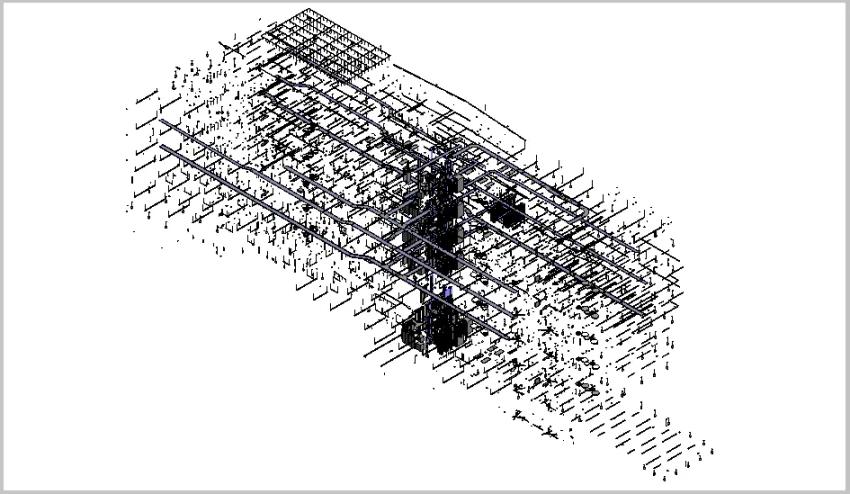
Electrical drawings from the MEP plans provide information about every distribution center of the structure and details about power supply assistance. Communicating, troubleshooting, or documenting a powerhouse situation can become a tedious job if not for the Electric system of the building.
The engineering services can help in planning out the layout for wiring and conduits using MEP design software that limits the overall length of the circuit and eliminates site clashes with mechanical and plumbing services.
The site engineers can decode MEP plans to troubleshoot problems and save time and costs invested in project completion. It is crucial to consider circuit protection devices, proper grounding, and surge potential to ensure safety and provide maximum energy efficiency.
For industrial projects, it is essential to devise the best routes for electrical conduit and wiring, providing flexibility and ensuring optimum material usage.
MEP BIM Electrical services can help in planning the most suitable electrical layouts for wiring and conduits, minimizing space usage and total circuit length.
Inclusions:
- Control Mechanisms
- Wiring diagrams
- Security and access control technologies
- Indoor and outdoor lighting details
- Switch & socket positioning details
- Details about the provision and distribution of electrical power
- Alerts and monitoring systems
Plumbing Plans
A well-planned plumbing layout depicts the simple and crucial system of water intake in the building and flushing out of the waste back out of the building. The plumbing layout defines the sizes, shapes, and locations of pipes, valves, tanks, and fixtures to avoid site discrepancies and the need for modifications.
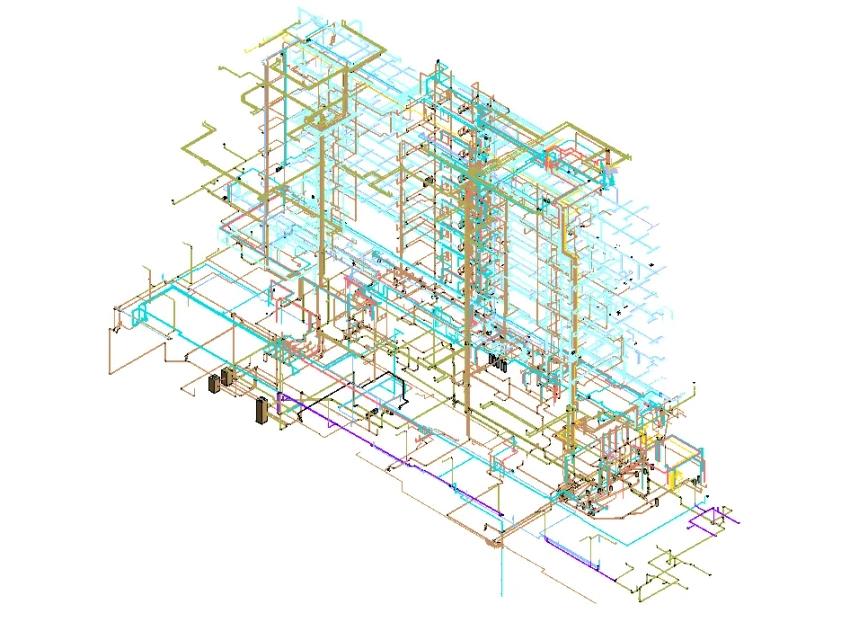
The system maintains the smooth circulation of water within the built form, provides fresh and clean water to the inhabitants or users, and ensures the removal of residual wastewater outside the building premises.
It is important to ensure the inclusion of key coding, drain-waste-vent elevation, and supply drawings while developing MEP plans for plumbing services.
The DWV elevation depicts the system that is designed to carry water and waste in the structure, and the supply drawings indicate the estimated length of supply pipes and the size of these pipes.
The BIM plumbing services are inclusive of assigning hot and cold water sources for usage, purification techniques that can be used for water treatment, effective sewage systems, and drainage systems for groundwater, underground water, and rainwater.
Inclusions:
- Supply drawings
- Drain-waste-vent (DWV) elevation
- Positioning of Valves
- Riser drawings
- Sanitary fixtures and their exact type
- Pipe sizes
- The layout of Vent Pipes
- Location of Drains
Significance of MEP BIM Modeling Services
MEP BIM modeling services are a team effort well equipped and skilled with the ability to generate MEP plans with utmost efficiency. The construction companies prefer operating with MEP building services rather than opting for three different professionals to focus on each discipline separately.
A combined service ensures seamless operation and execution of all three systems on the project site. Here are a few of the benefits of MEP services for industrial projects:
Minimize Overall Energy Consumption
If you think about industrial projects, the areas of energy consumption are mainly HVAC, lighting, machinery, and other electronic devices. MEP companies can treat these areas as opportunities to reduce energy consumption and enhance building performance.
This can be achieved by integrating building system controls into the spaces and using lighting device efficiencies. Another sustainable method for energy consumption can be incorporating solar energy plants while designing industrial projects.
Solar plants allow industries to generate their energy as an infinite resource and fulfill large energy requirements of industries during peak periods.
Reduced Water Wastage
Water is a prominent natural resource that is cheap, but is often wasted as water wastage or leakage. The construction companies can integrate MEP BIM modeling services and generate MEP plans for efficient plumbing layouts and ensure minimal wastage of this precious resource. Strategies such as touch-free taps and low-flow toilets can be introduced as simple approaches for saving water.
Significant Cost Savings
Well-detailed MEP plans lead to easy extraction of data and execution of various services on construction sites seamlessly, leading to a better design development process.
MEP services prioritize energy efficiencies and resource optimization leading to significant cost savings on industrial projects. With the help of MEP plans, construction professionals can eliminate clashes and discrepancies before the construction work starts, resulting in minimal rework and material wastage, ultimately reducing project costs.
Role of MEP Plans in Building and Industrial Projects
Now that we’ve broken down the systems themselves, the real question is, what do coordinated plans actually change on a project? The answer shows up quickly once construction starts.
For building projects, MEP Plans for Building Projects operate as more than drawings. They function as:
- The permit submission set for authorities
- The installation roadmap for contractors
- The reference point for inspections
- The long-term maintenance record for facility teams
When designers clearly define routes for ducts, pipes, and conduits, contractors spend less time probing ceilings or reopening walls. That reduction in uncertainty leads to fewer RFIs and fewer expensive corrections. When engineers embed performance data into the plans, teams can run energy and thermal analyses before crews mobilize. This helps owners avoid operational surprises after handover.
Industrial facilities demand even tighter alignment. Here, MEP process continuity drives revenue. In those environments, MEP Plans must coordinate:
- Process equipment utilities
- Compressed air and steam networks
- Redundancy strategies
- Specialty utility connections
If those relationships are missed, downtime risk increases. These MEP plans for Industrial facilities help in sequencing, prefabrication, and procurement decisions. They shape how the entire project unfolds. Once teams establish that foundation, the next logical step is examining how BIM supports deeper coordination.
BIM Integration in MEP Planning
We just talked about how plans guide installation. The next shift happens when teams move from static drawings to coordinated models. That is where BIM changes the workflow.
Instead of working with isolated 2D sheets, engineers build 3D parametric models where geometry and data stay connected. That means:
- Ducts, pipes, conduits, and equipment carry size and performance data
- Quantity schedules update when dimensions change
- Fabricators receive accurate information for production
This approach strengthens MEP BIM for Construction. Architects, structural engineers, and MEP disciplines combine their work into a federated model. Once those models sit together, coordinators run MEP Clash Detection to identify physical conflicts and clearance issues before crews mobilize. That early review reduces site-level improvisation.
When internal teams face capacity limits, firms often consider outsourcing MEP Services to deliver discipline models and coordination reports. That only works when everyone follows a clear BIM Execution Plan, since standards and naming conventions must stay consistent.
As teams mature in this process, they see fewer surprises in the field and better prefabrication accuracy. Naturally, that leads to the bigger question. What measurable benefits does this coordination actually deliver?
Benefits of MEP Plan in Construction Project
We moved from components to BIM workflows. Now we list how coordinated plans actually help project teams in measurable ways.
Reduced Rework and Fewer RFIs
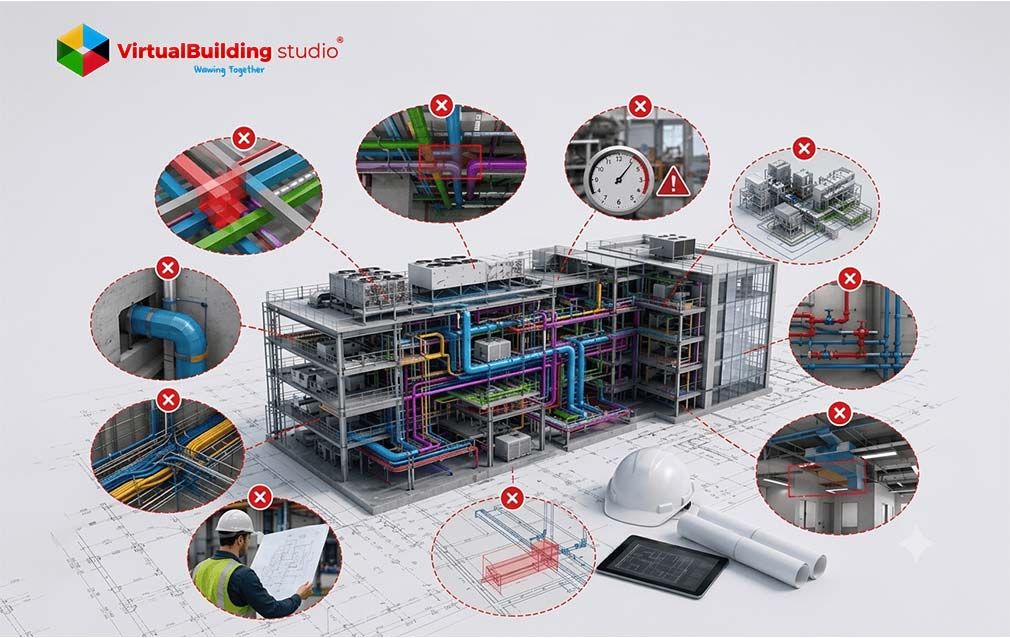
Early coordination through model-based reviews and MEP Clash Detection prevents physical conflicts between trades. When coordinators identify issues in the federated model, they assign responsibility and resolve clashes before installation. The process reduces change orders and field rework.
Improved Constructability and Prefabrication
Mechanical engineering team produces detailed HVAC Duct Shop Drawings and fabrication-level pipe spools. Using these MEP drawings, mechanical contractors prefabricate components off-site. Prefabrication reduces on-site job hours and simplifies sequencing for installers. This results in lower labor risk and tightens schedule certainty.
Better Energy and Performance Outcomes
When MEP models encode loads and operating parameters, energy analysts and mechanical engineers run simulations that guide equipment sizing and control strategies. That lets owners avoid oversizing and reduces lifecycle operating cost because teams align installed capacity with actual demand.
Enhanced Safety and Compliance
MEP plans that are prepared under codes such as NEC and IPC include clear single-line diagrams, panel schedules, and piping risers. This supports inspections for electrical and plumbing systems. MEP teams document required clearances and protective devices in the plan set. This aids field installers and inspectors have less uncertainty during sign-off.
Stronger Lifecycle Handover and Maintenance
As-built MEP Plans and linked BIM data become the single source of truth for facility managers. When maintenance teams receive model elements with asset IDs and maintenance parameters, they plan shutdowns, order correct spare parts, and find faults faster.
These benefits occur because engineers, coordinators, contractors, and fabricators use the plans and models to make decisions. The following section discusses why, despite these advantages, implementation still faces recurring obstacles.
Common Challenges in MEP Implementation
Even when teams know the benefits of well-coordinated MEP Plans in Construction, predictable challenges still show up on real projects. These obstacles slow progress. They add cost and risk.
Inadequate Interoperability and Information Flow
A long-standing U.S. government study found that inadequate information interoperability across design, engineering, and construction workflows costs the capital facilities sector approximately $15.8 billion each year. These losses result from redundant data entry, miscommunication, and fragmented processes, where project teams fail to share critical information efficiently.
Fragmented Coordination Timing
Disciplines often model in isolation. Teams postpone MEP BIM coordination services to later phases. Spatial conflicts pile up. Crews fix problems in the field. Crews should have fixed them in the model.
Inconsistent Standards and Model Quality
Teams work without agreed naming conventions, data structures, and coordination thresholds. Teams spend more time reconciling models. Teams spend less time resolving real issues. Even strong clash detection processes weaken.
Jurisdictional Review Friction
Plans may satisfy one permitting authority. Plans may require revision for another. Teams face delays without early jurisdictional planning.
Skill Gaps and Quality Control
Limited in-house expertise in MEP BIM challenges coordination. Owners hire external teams without a strong BEP (BIM Execution Plan) and QA oversight. Model inconsistency increases.
These practical barriers explain the need for standard MEP BIM Services. These barriers explain the need for responsibility matrices. Earlier coordination matters as much as the tools.
Conclusion
The intersection of three disciplines of building design, namely mechanical, electrical, and plumbing services, necessitates the requirement of MEP BIM modeling services for construction projects.
These services provide building automation that allows for centralized handling of MEP systems using hardware or software networks, boosting efficiency and offering control over various critical operations for satisfactory building performance.
A construction company can include BIM modeling services for their industrial or any other projects for incorporation of MEP plans with expertise, reducing the overheads and streamlining the workflow.
Get experts to take over MEP Modeling Services for your next Industrial Project