2000+
Projects Delivered

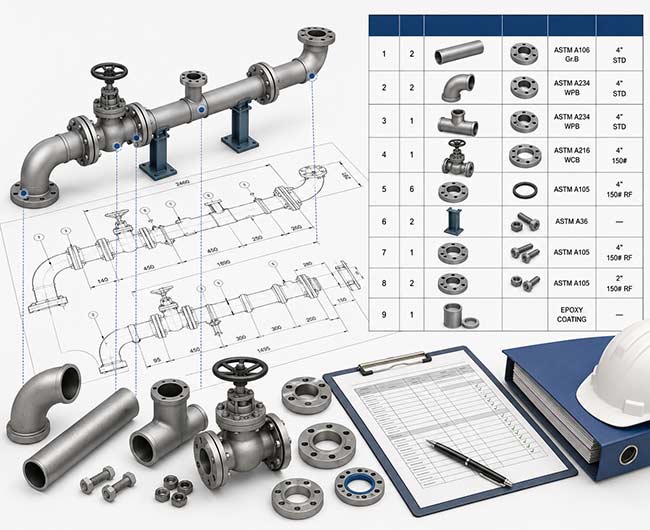
Our pre-vetted MEP experts provide accurate material takeoffs by using coordinated BIM models and helping procurement teams order correctly and keep projects on schedule.
2000+
Projects Delivered
300+
Global Clients
11+
Years of Experience
200+
Licensed Engineers
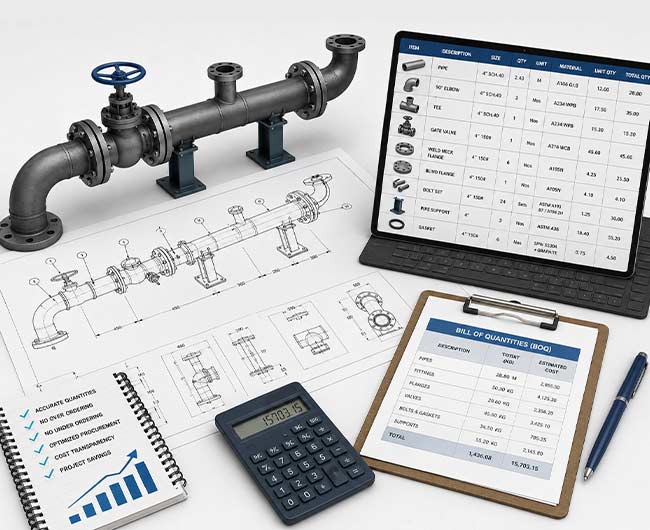
The inaccurate figures related to quantity can cause cost overruns, delays in procurement and inefficiencies on site. Material miscalculations using traditional quantity takeoff methods are time consuming and error-prone. Especially for complex multidisciplinary projects.
Our BOM services are built on US standards like CSI Master Format and Uniformat, which allow a systematic and standardized classification of materials. We use BIM-based takeoff and Revit automation to extract and validate quantities. These takeoff quantities are consistent with the design intent. They provide reliable procurement, costing and construction planning.
Trusted By
Trusted By
Our MEP experts excel at transforming your raw design data into BIM enabled, structured and actionable material intelligence to improve your construction cost estimating.

Using Work Breakdown Structures, we develop detailed QTO schedules, so that procurement teams can confidently account for every component.

Our engineers retrieve material data directly from the coordinated BIM models using Revit and Navisworks APIs. Realtime model updates keep BOM data up to date with the latest design.

Our quality team uses rule based validation to compare BIM parameters with project specifications before procurement, that minimizes quantity discrepancies and enhances reporting data.

IFC or XML outputs that support 5D BIM workflows are available. These structured files replace the geometry-based material information of manual 2D quantity estimation.
Multidisciplinary material quantification tailored for real-world construction and procurement needs.
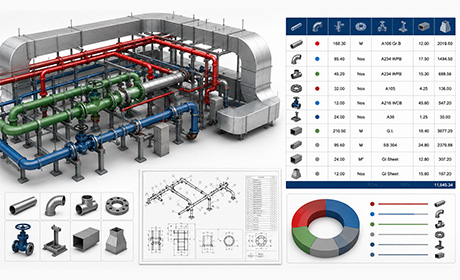
Detailed quantity extraction for HVAC ducts, chilled water, drainage, and piping networks to support accurate fabrication, installation sequencing, and coordination.
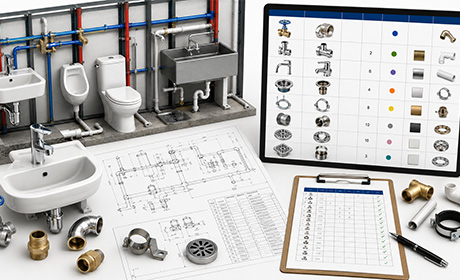
Valves, joints, hangers, supports and connectors are quantified from project specifications, results in reduced procurement errors and site discrepancies during installation.
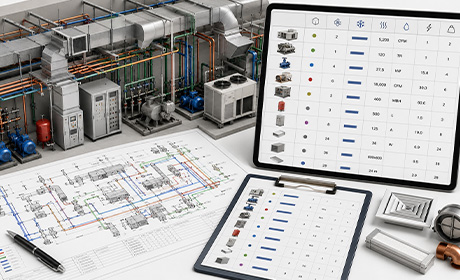
BIM-based quantity takeoffs of AHUs, pumps, chillers, electrical panels and other mechanical equipment help in coordinated planning and procurement.
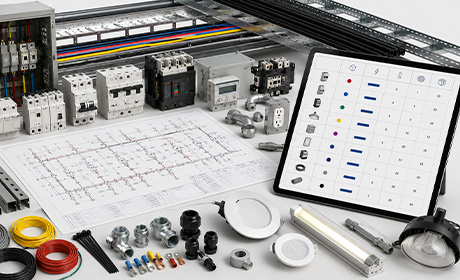
Conduits, cable trays, wiring, switch gear, fixtures, etc., are pulled out to help in procurement, installation planning and accurate load calculations.
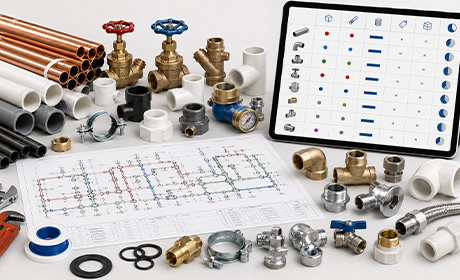
Where required, sanitary, domestic water and storm water components are quantified according to approved designs and maintained consistently throughout onsite installation activities.

Diffusers, dampers, insulation and duct accessories for efficient system installation and performance enhancement quantities.
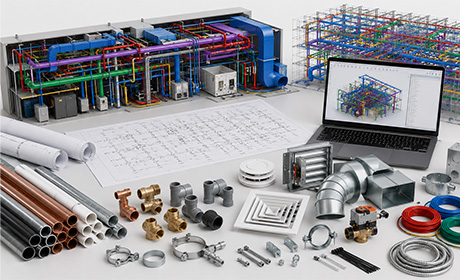
Materials are categorized by CSI MasterFormat or project specific standards that improve traceability and management of procurement during handover and stakeholder review.
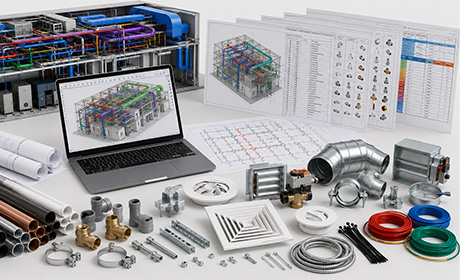
Integrated BOM data that is aligned with the coordinated BIM models reduces coordination issues and helps achieve smoother construction execution for clients.
What We Provide in Quantity Take-Off Services
Outputs optimized for 5D BIM integration, providing high fidelity data for accurate cost estimation and streamlined construction procurement workflows.

BIM Quantity Take-off
Get better quantity information from coordinated MEP models and you'll be able to budget faster, avoid surprises and make more confident pre-construction decisions.
Complete List of Components
Streamline fabrication, avoid costly delays and ensure accurate ordering from procurement teams with clear metadata for MEP inventories.
Bill of Quantities Certified
Get standardized BOQ documentation that offers more clarity in bidding, better cost control and more reliable estimates across MEP discipline.
Cut Lists & Material Schedules
Receive fabrication-ready cut-lists and schedules that minimize waste, optimize installation planning and keep the projects flowing efficiently at the job site overall.
Leveraging industry-leading BIM software to create accurate, coordinated, and constructible MEP models for complex projects.
 Autodesk Revit
 BIM 360
Our Bill Of Material (BOM) Workflow
A structured workflow that extracts, validates, and organizes material quantities for accurate procurement and project planning.
Data Collection and Scope Definition
Gather BIM models, design drawings and the specifications, then analyze them to sort out what's in scope and how it conforms to the project requirements, also to the documentation standards.
Data Collection and Scope Definition
Gather BIM models, design drawings and the specifications, then analyze them to sort out what's in scope and how it conforms to the project requirements, also to the documentation standards.
BIM-Driven Quantity Take-Off
Use BIM tools for model-based QTO, so we can pull material quantities across MEP systems, which then feeds the next step processing workflows in a more accurate way.
BIM-Driven Quantity Take-Off
Use BIM tools for model-based QTO, so we can pull material quantities across MEP systems, which then feeds the next step processing workflows in a more accurate way.
Cross-Check & Data Validation
Re-check the quantities against design intent, the specifications and the coordinated BIM model. The goal is that everything stays accurate, complete, and consistent across all disciplines.
Cross-Check & Data Validation
Re-check the quantities against design intent, the specifications and the coordinated BIM model. The goal is that everything stays accurate, complete, and consistent across all disciplines.
Classification and Standardization
Arrange the structure material information by CSI Master format and Uniformat, and end up with standardized BOQ outputs. This helps for 5D BIM, and also for cost estimation workflows, without a lot of manual rework.
Classification and Standardization
Arrange the structure material information by CSI Master format and Uniformat, and end up with standardized BOQ outputs. This helps for 5D BIM, and also for cost estimation workflows, without a lot of manual rework.
Quality Control and Compliance Verification
Perform multilevel QC to produce material data that are code compliant, buildable, and dependable. Tie it back to NEC, SMACNA, ASHRAE, and IPC standards as needed.
Quality Control and Compliance Verification
Perform multilevel QC to produce material data that are code compliant, buildable, and dependable. Tie it back to NEC, SMACNA, ASHRAE, and IPC standards as needed.
BOQ Compilation & Final Submission
Bring the validated quantities together into structured Bill of Quantities reports, using Excel based outputs. Then we use those results for cost estimation, procurement, and planning, all in one submission.
BOQ Compilation & Final Submission
Bring the validated quantities together into structured Bill of Quantities reports, using Excel based outputs. Then we use those results for cost estimation, procurement, and planning, all in one submission.
Outsource your BOM creation to improve quantity accuracy, reduce manual effort and speed up project decision making.

Collaborate when true and accurate 5D cost baseline is needed for high fidelity Quantity Takeoff and to minimize cost risk in competitive bidding.

Engage when complex MEP systems require micro level tracking of subcomponents to make sure spatial coordination aligns with actual procurement and installation.

Use BOM services to source long-lead equipment and bulk material orders with validated parametric data to help avoid costly logistical delays and overages.

Work together when moving to LOD 400 to create accurate cut-lists and assembly schedules, increasing off-site assembly and reducing waste on the job site.
Apply 5D BIM integrated BOM outputs for data driven decision making to improve estimation accuracy, procurement efficiency and cost control in complex construction workflows.
Reliable quantities based on BIM are the basis for reliable budgeting minimizing variations in costs and improving the financial planning during the project.
The validated BOM and BOQ outputs help procurement teams order the right quantities, which reduces excess inventory and material waste.
BIM based Quantity TakeOff speeds up the extraction of quantities, reduces manual effort and improves project turnaround time.
Standardized BOQ data and coordinated BIM models provide estimators with reliable quantity data resulting in improved project forecasting accuracy.
Reliable quantities based on BIM are the basis for reliable budgeting minimizing variations in costs and improving the financial planning during the project.
The validated BOM and BOQ outputs help procurement teams order the right quantities, which reduces excess inventory and material waste.
BIM based Quantity TakeOff speeds up the extraction of quantities, reduces manual effort and improves project turnaround time.
Standardized BOQ data and coordinated BIM models provide estimators with reliable quantity data resulting in improved project forecasting accuracy.