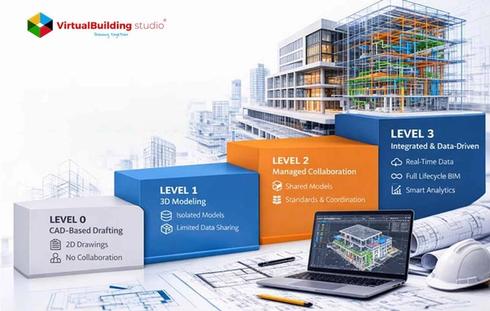

The US construction market runs on tight deadlines, razor-thin margins, and rapidly shifting client expectations. Architecture firms deliver precise documentation under increasing pressure across residential and commercial projects.
The global AEC services market, valued at $108 billion in 2023, is projected to reach $263 billion by 2030, growing at a CAGR of 14.5%. Residential developers expect permit-ready drawing sets within weeks, and commercial stakeholders request multiple revisions during active project phases, which intensifies documentation demand.
Firms experience production constraints when internal teams manage both design and drafting responsibilities. This structure creates workflow congestion and delays across documentation cycles. Outsourced Architectural Drafting provides a strategic solution by expanding production capacity, enabling parallel workflows, and supporting continuous drafting progress. External teams accelerate documentation delivery, align design intent with execution speed, and drive faster project timelines across complex developments.
Why Project Delays Are Common in U.S. Architecture Firms
- Architects manage design decisions, client communication, consultant coordination, and drafting production simultaneously. This multi-tasking structure divides attention, reduces efficiency, and slows output across documentation cycles and deliverables.
- Traditional workflows position drafting after design approvals. This linear sequence extends project timelines since production teams wait for finalized inputs instead of advancing documentation alongside ongoing design development stages.
- Client-driven revisions occur frequently during documentation phases. Teams process these updates sequentially, which expands production timelines and introduces repeated coordination loops across architectural, structural, and MEP deliverables.
- Administrative overhead consumes substantial production hours through permit submissions, code compliance reviews, and documentation adjustments. These processes extend timelines and increase workload pressure on internal teams.
- Hiring cycles delay scalability during peak workloads. According to the AGC's 2024 Workforce Survey, 54% of contractors report experiencing project delays due to workforce shortages, and 94% struggle to fill open positions.
- Coordination gaps between consultants create compounding delays. Teams wait for updated inputs, redlines, and approvals, which slows documentation progress and affects downstream construction schedules across project phases.
These factors highlight a process-driven delay pattern where workflow design dictates project outcomes. Firms with similar talent levels produce different timelines based on production structure, coordination strategy, and execution models. Which positions workflow optimization as the primary driver of faster and predictable project delivery.
What Is Outsourced Architectural Drafting?
Outsourced architectural drafting operates as a production layer extension of a firm’s design pipeline, where external specialists translate evolving design inputs into structured, code-compliant documentation in real time. Instead of functioning as a downstream support task, drafting integrates directly into active project workflows, allowing design intent and technical production to progress simultaneously across distributed teams.
Scope of Architectural Drafting Services
Architectural Drafting Services function as a full-scale production system that mirrors and often exceeds internal drafting capabilities through specialization and process standardization:
- High-precision 2D CAD documentation including annotated plans, multi-level sections, and coordination-ready elevations
- Construction Documentation sets structured for jurisdiction specific permit approvals and phased submissions
- BIM modeling with LOD development for design coordination, quantity extraction and clash ready outputs
- CAD conversion pipelines that translate legacy PDFs, scanned drawings and hand sketches into structured, layered CAD/BIM environments
- Fabrication aligned shop drawings and millwork detailing with production tolerances and material specifications
Embedded Workflow Integration
External drafting teams plug directly into live project environments through shared data ecosystems. Instead of waiting for finalized design inputs, production begins at early-stage design and evolves with each iteration:
- SD models convert into DD-level coordinated drawing sets without workflow interruption
- Redlines, RFIs, and consultant inputs integrate into ongoing drafting cycles through tracked revisions
- Version-controlled environments maintain drawing consistency across multi-phase developments
A multifamily housing project, for example, can run unit-type development, core layout refinement, and permit documentation in parallel streams, each handled by dedicated drafting resources within the same production framework.
Production-Level Value
- Continuous documentation flow aligned with iterative design development
- Dedicated drafting bandwidth focused entirely on output generation and accuracy
- Immediate scalability that matches project complexity and submission timelines
This approach shifts drafting from a reactive function into a synchronized production engine. Digital documentation evolves alongside design decisions, enabling measurable gains in delivery speed, coordination accuracy, and project throughput.
How Outsourcing Drafting Accelerates Project Delivery
The Follow the Sun production model enables continuous drafting across global time zones. When U.S. design teams close their workday, offshore drafting teams begin production immediately. This transition creates a 24-hour workflow cycle where drawing sets advance overnight and return ready for review the next morning.
This continuous production cycle compresses documentation timelines across all project phases. Leading AEC outsourcing providers report faster turnaround when time-zone-based workflows replace sequential in-house production models, which accelerates drawing development and submission readiness.
When firms Outsource Architectural Drafting Services, they reduce RFI turnaround times significantly and improve documentation accuracy. Research by the Navigant Construction Forum shows that each RFI carries a median response time of 9.7 days and costs approximately $1,080, with total RFI-related costs averaging $859,000 per project. Dedicated external drafting teams respond to documentation requests within 24 hours and produce coordinated drawing sets with higher precision. This reduces the frequency of RFIs during construction. This combination of rapid response and accurate documentation directly improves project delivery timelines and coordination efficiency.
Additional delivery advantages include:
- Parallel Workflow Execution: Design development and construction documentation progress simultaneously across dedicated teams, which reduces overall project duration.
- Instant Revision Cycles: Specialized drafting teams process redline markups within 24–48 hours, which accelerates approval cycles and drawing updates.
- Scalable Production Capacity: Project managers expand drafting teams within 48 hours to match workload spikes and maintain consistent output speed.
- Rush Delivery Capability: External teams allocate dedicated resources for urgent submittals, which supports fast-track project requirements and tight deadlines.
Key Architectural Drafting Services Firms Commonly Outsource
Firms outsource production-critical deliverables that directly impact coordination accuracy, permit approvals, and fabrication readiness. CAD Drafting Services for Architects function as specialized production pipelines aligned with BIM standards, LOD progression, and trade-level detailing requirements.
Construction Documentation Sets
Multi sheet permit packages structured with discipline-specific layering, code annotations, schedules, and phased submission logic aligned with jurisdictional approval workflows.
2D CAD Drafting
Fully annotated plans, elevations, and sections with standardized lineweights, sheet compositions and cross referenced callouts for coordination across consultant drawings.
3D BIM Modeling
Parametric Revit models with embedded data for clash detection, quantity extraction and multi-discipline coordination across architectural, structural, and MEP systems.
Shop Drawings
Trade specific detailing for steel, curtain wall, and millwork with connection details, tolerances, and installation sequencing aligned with fabrication workflows.
As-Built Documentation
Field-verified drawings derived from point cloud data, supporting renovation accuracy, retrofit planning, and deviation tracking against original design intent.
Interior & Millwork Detailing
Joinery-level drawings with material specifications, hardware mapping, and assembly logic aligned with manufacturing and on-site installation requirements.
3D Visualization
High resolution renders generated from BIM environments, aligned with actual materials, lighting conditions, and geometry for stakeholder validation.
CAD/BIM Conversion Pipelines
Structured transformation of legacy drawings into layered CAD or parametric BIM models with data normalization for reuse across future project phases.
External teams organize these services into dedicated production streams, which allows simultaneous execution across documentation layers and improves coordination depth across complex building systems.
The Role of Remote Drafting Teams in Faster Turnaround
A remote architectural drafting team like Virtual Building Studio operates as a direct extension of in-house production, enabling continuous drafting cycles across time zones. The Dedicated Resource Model by VBS supports simultaneous project execution and increases overall production capacity without internal expansion.
These remote architectural drafting teams function on a production-grade technical stack aligned with advanced BIM workflows. Cloud platforms such as Autodesk Construction Cloud (formerly BIM 360) allow real-time model synchronization between cross-functional teams. Revit worksharing environments allow multiple drafters to work concurrently on a single model without design conflicts. Dedicated production managers oversee task allocation, enforce quality checks, and provide daily progress updates. Standardized layer systems and file naming conventions align with firm-specific requirements.
The predefined standardized workflow allows on-demand dedicated remote drafters to seamlessly integrate into existing project environments. Reputed architectural outsourcing firms like VBS secure file transfer protocols with encrypted access controls and maintain data integrity across all project communications.
Architectural drafting for home builders demonstrates the scalability of this model through high-volume residential production. A developer managing multiple custom homes can receive completed drawing sets for several units within a single week using the dedicated remote drafting support offered by Virtual Building Studio. This output level requires significant internal resources when handled in-house. 75% of U.S. AEC firms now actively pursue remote team integration to address ongoing hiring constraints, which highlights the growing adoption of distributed production models.
Cost and Efficiency Benefits of Outsourced Drafting Services
Outsourcing drafting shifts fixed overhead to variable project costs. Architectural production changes at the cost level. USA firms report savings between 40–65% against fully loaded in-house work. One case study shows in a $20M project, offshore schematics and takeoffs cut costs by 65%. The team saved $130000. They submitted the bid 10 days earlier.
External production speeds up documentation timelines. It improves cash flow. It increases ROI through faster permit approvals, less remodeling, and tighter resource use across project lifecycles.
Key financial advantages include:
- Variable Cost Structure: Firms pay for actual production hours. Expenses match workload. Idle staffing costs drop.
- Higher Architect Productivity: Design teams focus on client engagement and concept work. This focus drives revenue generation and project value.
- Faster Invoicing Cycles: Documentation moves faster. Permit approvals come sooner. Construction starts earlier. Owner billing milestones move up across active projects.
- Reduced Rework Costs: Multilevel QA/QC workflows catch coordination issues early. Drawing accuracy improves. Costly revisions drop before submission stages.
- Zero Software Licensing Costs: External teams bring their own Revit, AutoCAD, and Navisworks licenses. Internal budgets avoid per-seat software costs.
Best Practices for Successfully Outsourcing Architectural Drafting
Successful outsourcing depends on process alignment, standardized workflows, and clear execution frameworks. Firms define production systems, communication protocols, and documentation standards. Output quality improves. Delivery stays consistent.
- BIM Execution Plan Alignment: Firms start each project with a detailed BEP. It defines LOD requirements, file naming rules, sheet structures, revision protocols, and model ownership across teams.
- Pilot Project Protocol: Teams start with a low complexity pilot project. They assess drafting quality, communication, and turnaround speed. They assign high value or time sensitive work after this step.
- Legacy Data Migration: CAD Drafting Conversion Services convert hand sketches, PDFs, and legacy AutoCAD files into Revit models. Historical data enters active BIM workflows.
- Communication and Review Framework: Teams run weekly coordination meetings. They use shared cloud platforms. They maintain real time feedback loops. Production priorities stay aligned. Revisions are addressed. Transparency remains between internal and external teams.
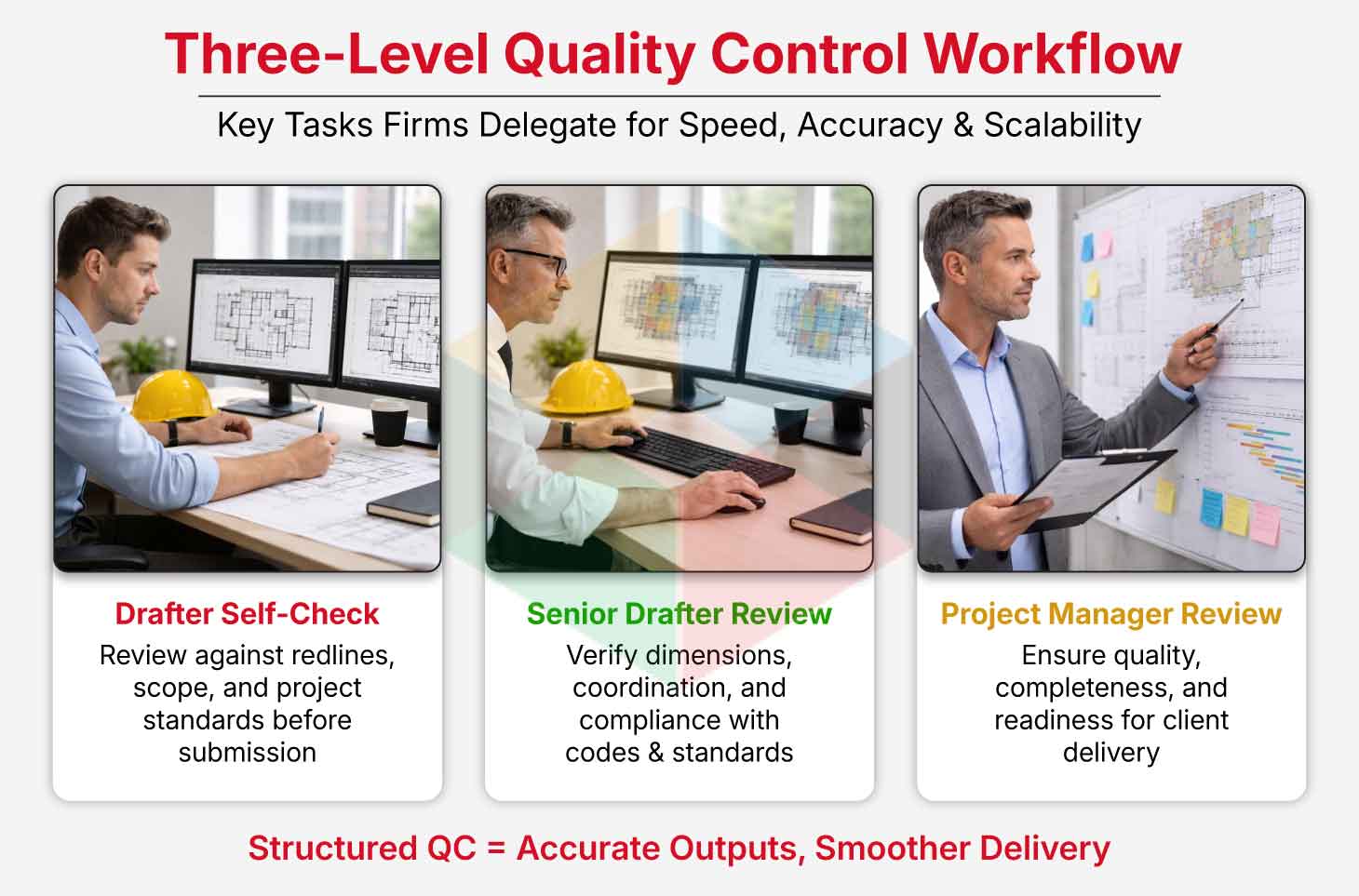
Process integration defines outsourcing success by aligning standards, communication, and quality systems into a unified production workflow that supports consistent, high speed project delivery.
The Future of Outsourced Drafting with AI and BIM Technologies
AI and BIM technologies reshape outsourced drafting workflows through automation, real-time coordination and data driven production systems. AI powered tools accelerate redlining, automate documentation generation, and enable rapid clash detection through Navisworks-based coordination. A documented case by Flintco shows AI-assisted preconstruction review reduced a 2–3 week manual process to 48 hours, identifying cross disciplinary discrepancies before bid submission. These advancements compress production timelines and improve drawing accuracy across every project phase.
Generative design platforms produce multiple layouts and massing options from parametric inputs, which accelerates schematic design output from days to hours. Cloud native BIM environments host entire production workflows, enabling real-time collaboration across global teams on a single model. A 2024 IFS Construction report predicts that 90% of construction companies will adopt cloud-based systems within five years. This signals rapid industry digital transformation.
Digital twin integration extends BIM data into facility management and lifecycle operations, creating long-term value beyond construction. Many firms in the USA that adopt AI-driven workflows deliver high-speed production without internal technology investment. With 92% of U.S. construction firms reporting hiring challenges, firms adopt outsourced AI-enabled drafting to scale production capacity, improve coordination accuracy, and maintain competitive delivery speed.
Conclusion
External drafting partnerships shift architectural production from capacity-limited workflows to performance systems aligned with speed, accuracy, and cost control. Industry data shows RFI response times average 9.7 days, with each RFI costing $2,000–$3,000. This directly impacts project budgets and timelines. External specialists produce coordinated documentation that reduces RFIs, improves drawing accuracy, and compresses approval cycles. This translates into measurable cost avoidance and faster project progression.
An Architectural Drafting Company in the USA acts as a long-term production partner. It delivers scalable drafting infrastructure aligned with project demands. Firms that integrate external production into core operations gain consistent delivery speed. Documentation cycles become predictable. Resource efficiency improves. This model supports workload shifts. It handles complex multi-project environments. It helps firms compete in high-pressure construction markets.