
Why Growing ArchitectureFirms Hit a
Documentation Wall
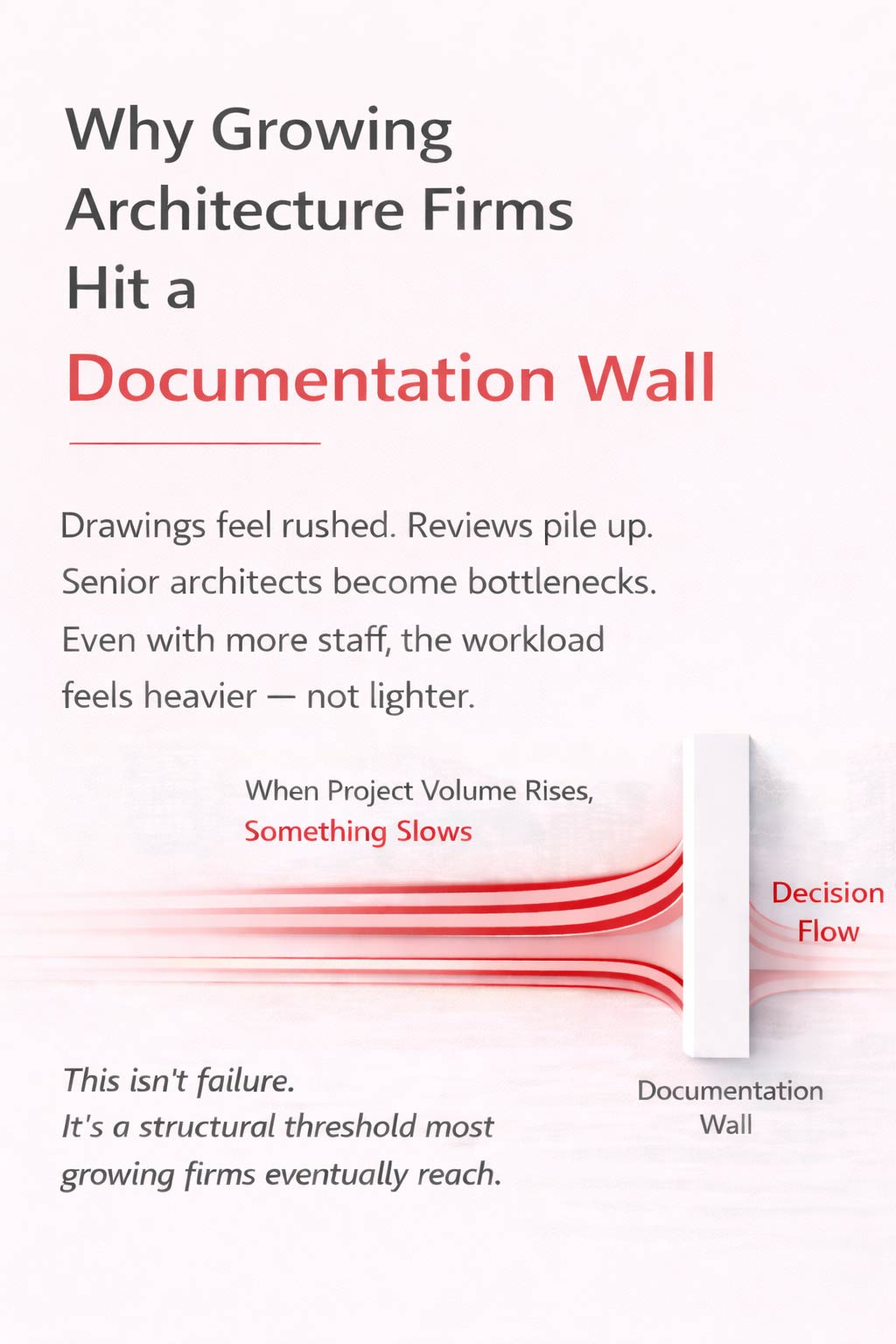
Drawings feel rushed. Reviews pile up.
Senior architects become bottlenecks.
Even with more staff, the workload feels
heavier — not lighter.
This isn’t failure.
It’s a structural threshold most growing firms eventually reach.
When Growth Stops Feeling Linear
As firms scale beyond a certain point, something shifts:
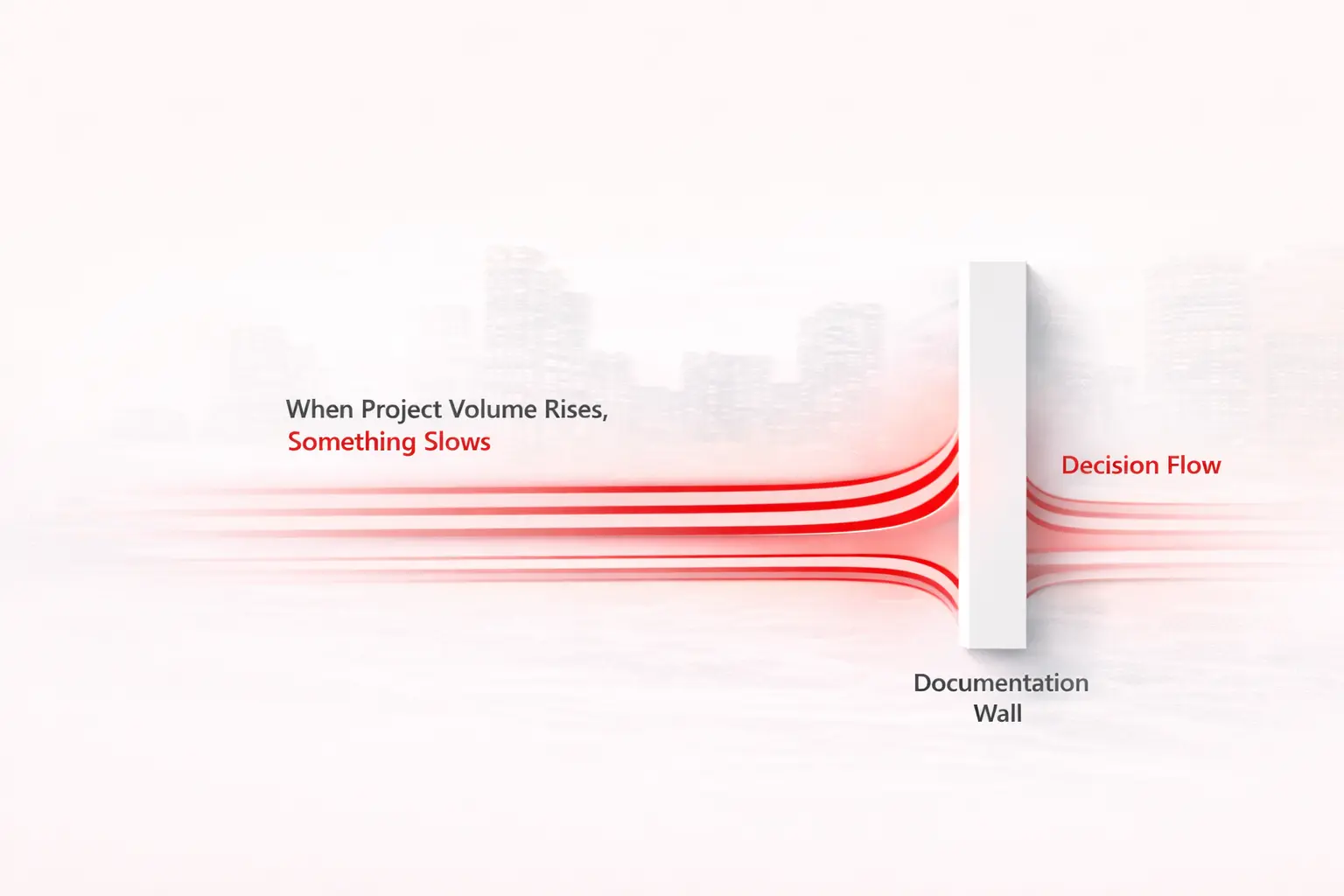
This is the Documentation Wall: when project volume grows faster than decision-making capacity.
The bottleneck is no longer effort.
It is throughput.
The hardest part of architecture isn’t the design — it’s keeping the business running while delivering on time.
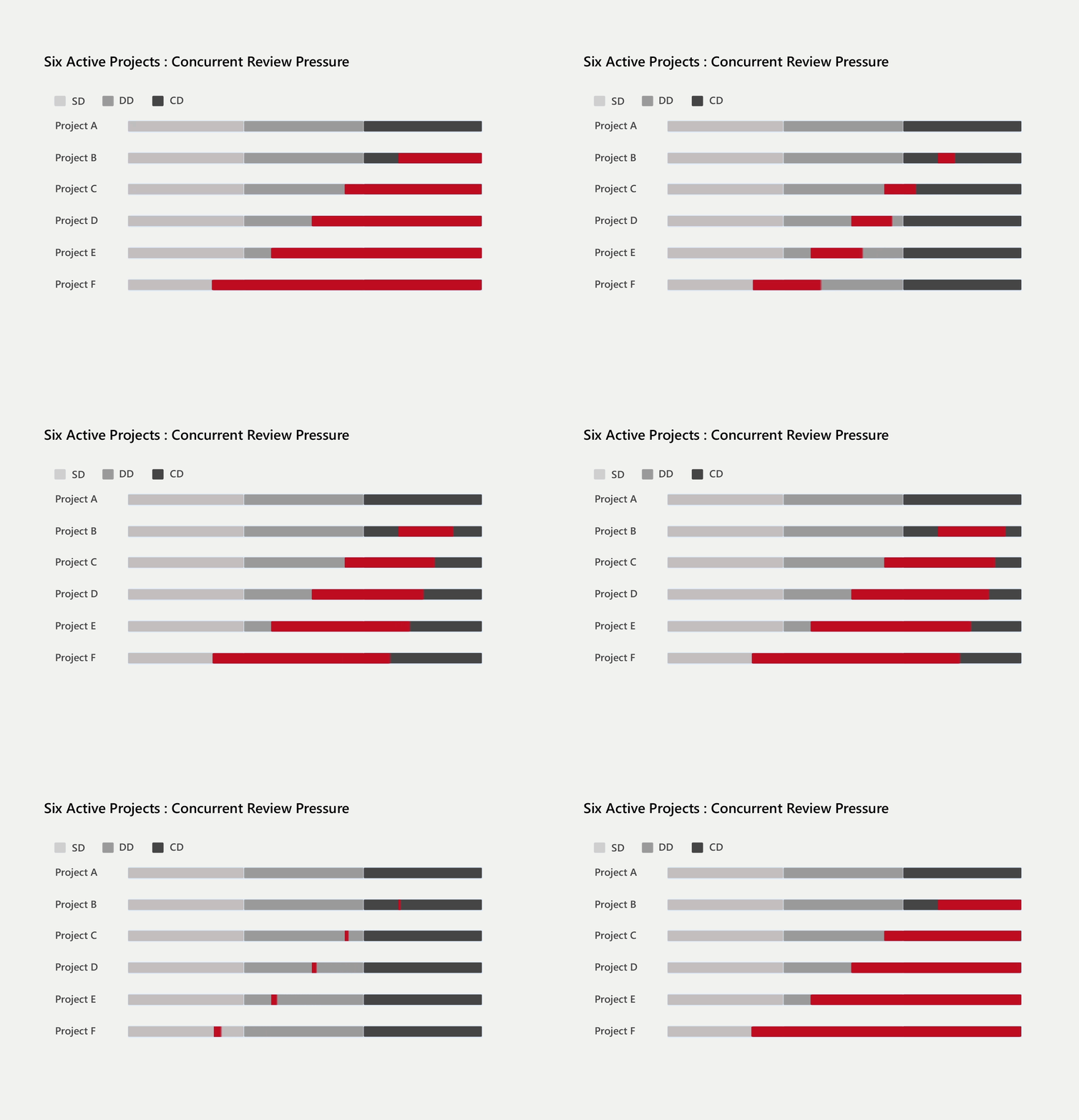
OVERLAPPING PROJECT PHASES
What the Documentation Wall Really Is
| What You See | What's Actually Happening |
|---|---|
| CDs rushed | Decisions bleed from SD/DD into CD |
| Redlines stacking | Review authority concentrates in one or two people |
| Quality uneven | Standards rely on memory rather than structure |
| Overtime constant | Effort compensates for systemic gaps |
“ It is a throughput constraint — where decisions, not drawings limit progress.”
The Documentation Wall Is Not
- Slow drafting staff
- Weak software skills
- Individual underperformance
Where It Appears First
The wall shows up in predictable patterns.
Project Phases
- SD decisions leak into DD
- DD changes trigger CD rework
- 30/60/90% reviews become correction checkpoints
Coordination
- Engineers wait longer for architectural direction
- Redlines sit before action
- Clash detection occurs late
Documentation
- BIM standards drift
- Revision cycles increase
- Permit comments multiply
Why Hiring Rarely Relieves Pressure
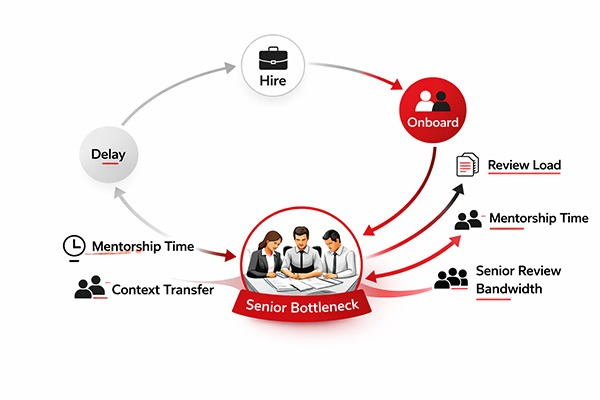
When strain appears, hiring feels logical. But new hires require:
Context Transfer
Time-intensive onboarding
Senior Review
Increased bandwidth demand
Mentorship Time
Ongoing training needs
Capacity is not headcount. It is decision flow.
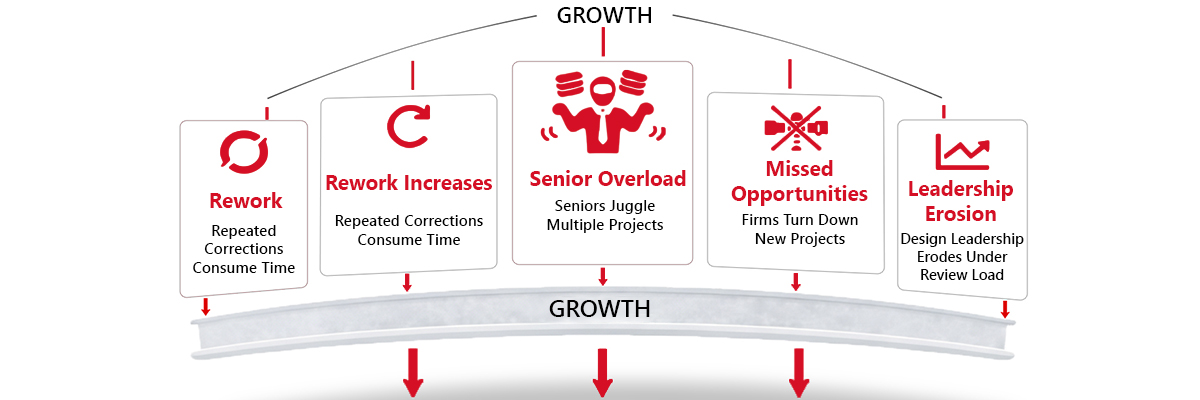
The Costs That Hide in Growth
Why This Happens at Predictable Stages
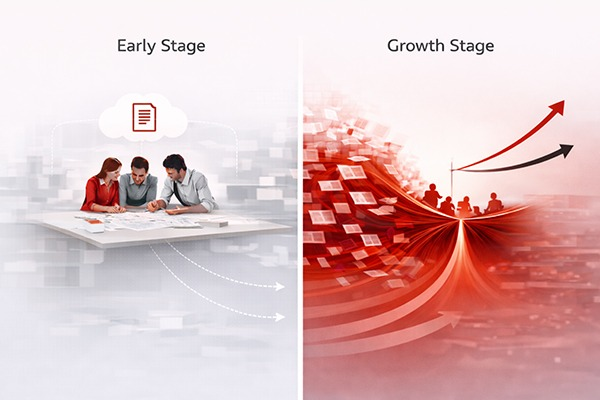
Early-stage firms rely on proximity and shared memory. As concurrency increases:
" The hardest part of architecture isn’t the design — it’s keeping the business running while delivering on time. "
The Shift That Eventually Happens
At a certain stage, firms stop asking:
"Who do we hire next?"
They begin asking:
"Where is our decision-making capacity constrained?"
Capacity becomes about
Throughput
Review Load
Documentation Ownership
Senior Bandwidth
Not just adding people.
FINAL REFLECTION
Growth exposes structural limits. It does not create them.
Before adding more people, it is worth asking:
Are we adding capacity — or adding complexity?