Why Delivery Starts Slowing Down as Architecture Firms Grow
As firms grow, review cycles expand, coordination gets heavier, and senior architects stay stuck in documentation longer than expected-despite hiring.

Growth doesn't reduce delivery pressure-it redistributes it.
The Pattern Most Architecture Firms Experience
You're running more projects than before-but delivery feels slower.
The pattern starts showing up:
Review cycles that used to take days now take weeks
Senior architects are still reviewing almost every drawing set
RFIs keep increasing-even after hiring more staff
Coordination gets heavier, not lighter, across projects
At first, it doesn't look like a system problem. But over time, it becomes impossible to ignore.
What Changes During Growth Stage
This isn't about performance. It happens because the structure of delivery changes as firms grow.
- More projects run in parallel
- More handoffs happen across teams
- More decisions require coordination
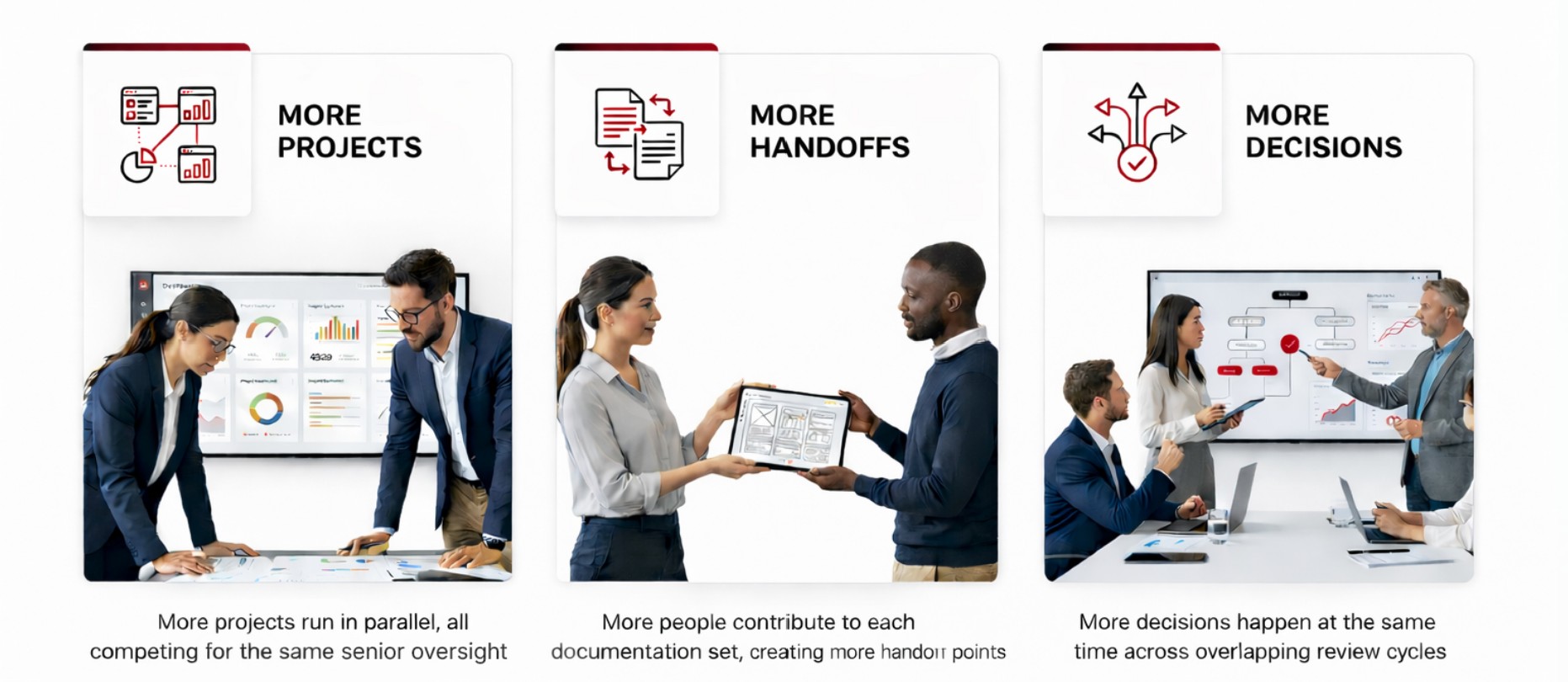
"Growth increases interdependence-not just workload."
-35fb7b7f6d636a185491a6436e99d1ad.svg)
The Gap: Coordination points multiply faster than capacity expands
What This Guide Helps You See
This guide breaks down why delivery starts slowing down-and where documentation begins to become the constraint.
Hiring doesn't remove delivery pressure—it redistributes it across the system.
Why Adding More People Doesn't Fix It
When delivery starts slowing down, hiring feels like the obvious fix. But adding people changes the system in ways that aren't immediately visible.

What increases immediately
- Contributors to each documentation set
- Coordination paths between team members
- Review load as seniors oversee new staff


What takes time
- Knowledge transfer about firm standards and client nuances
- Alignment on coordination conventions
- Independent decision-making without senior validation
The Shift in Senior Time
Principals and project directors are the first to feel it.
More time spent reviewing across multiple projects
Less time for design leadership and strategic work
Constant involvement in coordination decisions
Leadership time shifts from shaping projects to stabilizing delivery.
Where It Starts Breaking
Before You Hire Again, See What's Slowing Your Delivery
Understand what's actually slowing your projects before adding more people or restructuring your team.
See Where Your Delivery Is Breaking
Always at the forefront, Virtual Building Studio leads the architecture industry with its innovative solution.
©2026 Virtual Building Studio Inc.